
The Creation
Haydn’s late masterpiece performed by Václav Luks conducting the Orchestra & Choir of the Age of Enlightenment, one of the world’s most celebrated period instrument ensembles
Programme
- Joseph Haydn: Die Schöpfung (The Creation) Hob. XXI:2
Performers
- Orchestra of the Age of Englightenment
- Choir of the Age of Enlightenment
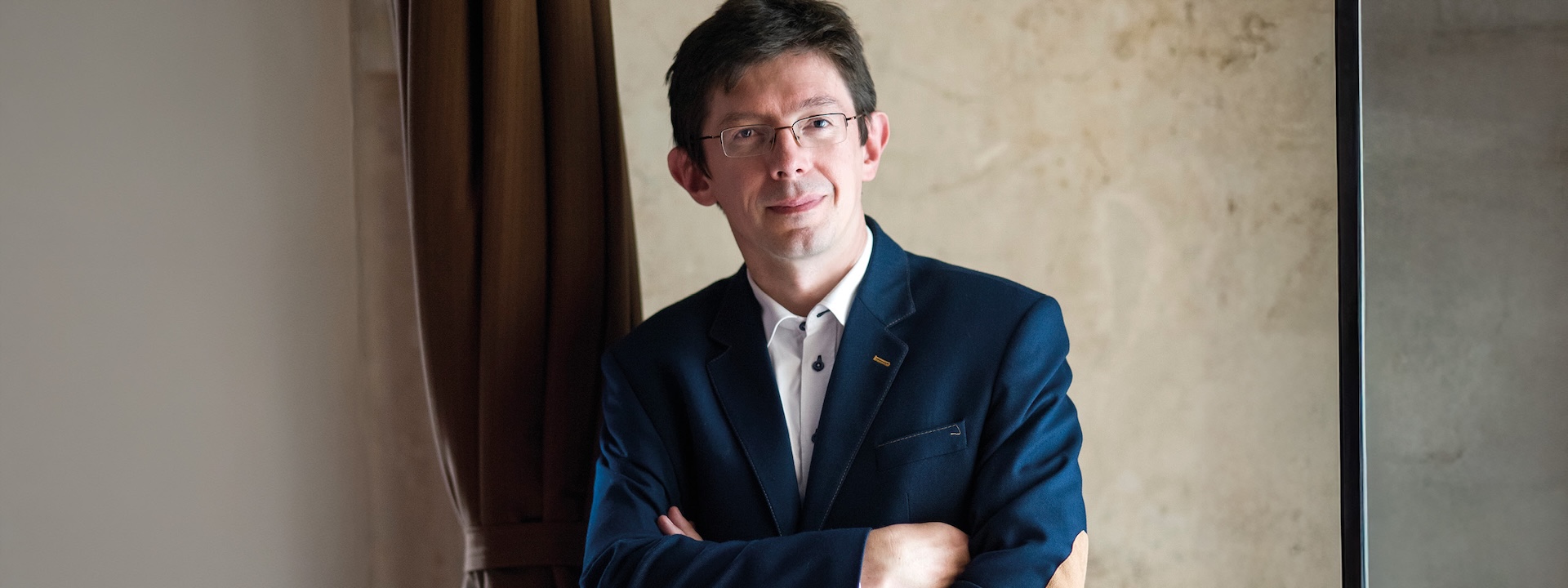
- Václav Luks – conductor
- Robin Johannsen – soprano (Gabriel, Eva)
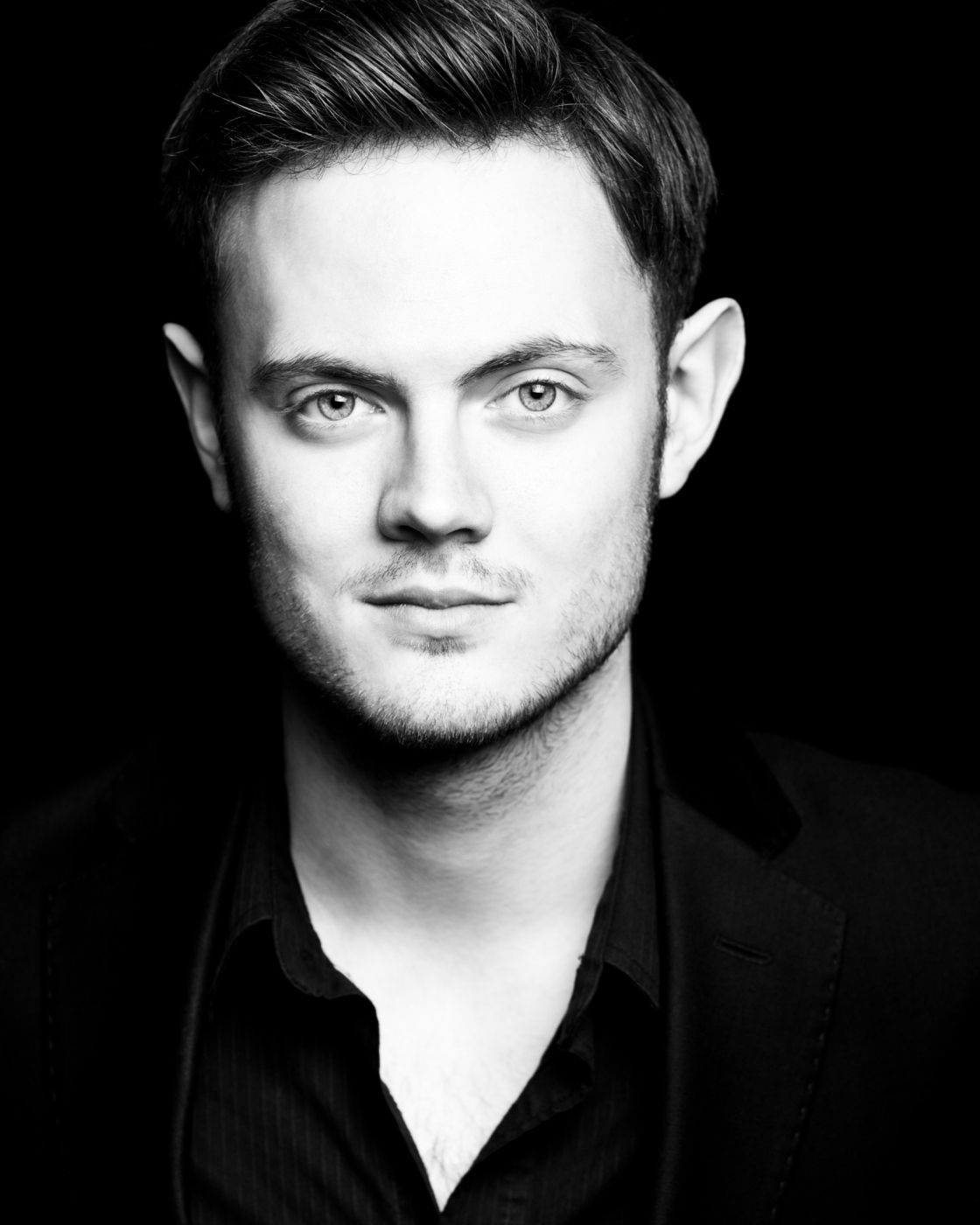
- Nick Pritchard – tenor (Uriel)
- Krešimir Stražanac – baritone (Raphael, Adam)
Pre-concert talk with Václav Luks at 6.45 pm (in Czech without interpreting)
CHANGE OF CAST
Dear audience members, please note the following cast change. Due to personal reasons, Samantha Clarke is unable to appear. The roles of Gabriel and Eve will instead be performed by the American soprano Robin Johannsen.
“The Creation is a work that combines the old with the new in a fascinating manner, in a way the culmination of Haydn’s musical dramatic language. We find here many beautiful, dramatic moments that directly call for visual representation. It would be difficult to find a more avant-garde musical structure at the end of the 18th century than the depiction of chaos at the beginning of the world in the Introduction. On the other hand, The Creation is to a large extent a traditionally religious work, having strong support in the Old Testament model. After all, Haydn himself admits that, while composing The Creation, ʽhe was more pious than ever beforeʼ,” conductor Václav Luks describing one of the most remarkable works from the end of the 18th century, which will be performed in the Rudolfinum’s Dvořák Hall on 28 May. Luks will present Joseph Haydn’s late tour de force, inspired by the oratorio by Georg Friedrich Händel, at the Prague Spring in collaboration with the period instrument ensemble Orchestra of the Age of Enlightenment, the Choir of the Age of Enlightenment and three first-rate soloists.
The libretto by Robert Lindley, based on the Book of Genesis, the Psalms and John Milton’s Paradise Lost, skilfully translated into German by Gottfried van Swieten, gave the composer the opportunity to create a work of spiritual depth, operatic dramatism and unprecedented imitative effects. The Creation begins with a symphonic “depiction of chaos”, a rather terrifying representation of “nothingness”, which is then swept up into a monumental rendering of the word “light”, sung by the choir. The oratorio is structured in three parts; the first part depicts the first four days of the creation of the world, the genesis of the earth and its flora; the second part deals with the creation of the animal world and of man. The third part treats the theme of the life of the first people, Adam and Eve, while the oratorio culminates in two grand closing paeans, hymns of praise and thanksgiving. The premiere was held on 29 April 1798 before a private audience in the Schwarzenberg Palace on Mehlmarkt (today Neuer Markt square) in Vienna. It was a phenomenal success, confirmation of which even exists in a document penned by Swedish diplomat Frederik Samuel Silverstolpe, a friend of Haydn, who described his impressions in the following words: “I was then among the audience, after having attended the first rehearsal a few days earlier. On this occasion Haydn was surprised by a gift. Prince Schwarzenberg, in whose large hall the work was rehearsed and later performed, was so utterly enchanted by its many beauties that he presented the composer with a roll of one hundred ducats, over and above the five hundred that were part of the agreement. No one, not even Baron van Swieten, had seen the page of the score wherein the birth of light is described. That was the only passage of the work which Haydn had kept hidden. I think I see his face even now, as this section was heard in the orchestra. Haydn had the expression of someone who is thinking of biting his lips, either to hide his embarrassment or to conceal a secret. And in that moment when light broke out for the first time, one would have said that rays darted from the composer’s burning eyes. The enchantment of the electrified Viennese was so general that the orchestra could not proceed for some minutes”.
Conductor, harpsichordist and visionary of historically informed interpretation Václav Luks is one of the most eminent figures on the European classical music scene. Together with his orchestra Collegium 1704 and vocal ensemble Collegium Vocale 1704 he appears in leading European venues in Berlin, Vienna, Salzburg, Amsterdam, London and elsewhere. As a conductor he regularly performs with leading early music ensembles and modern symphony orchestras, including Akademie für Alte Musik Berlin, the Czech Philharmonic, the Vienna Symphony and also the Orchestre national de France, with whom he performed at a benefit concert in support of the restoration of Notre-Dame Cathedral. He returns to the Prague Spring with the Orchestra of the Age of Enlightenment, one of the most noteworthy period instrument ensembles. The orchestra’s history goes back to the mid-1980s, when it was established by a group of musicians who wanted to experience more than conventional orchestral practice. They gradually built up a unique, self-governing ensemble which performs a broad repertoire without a principal conductor; they select distinguished conductors individually for their chosen projects, and have been headed by the likes of Sir Simon Rattle, Vladimir Jurowski, Iván Fischer and William Christie. Their programme for this season includes Mozart’s The Marriage of Figaro at the BBC Proms and the Glyndebourne Opera Festival, Beethoven and Mozart symphonies with Ádám Fischer and Robin Ticciati at London’s Southbank Centre, and Berlioz’s Symphonie fantastique with Sir Simon Rattle. Together with the affiliated Choir of the Age of Enlightenment, they last appeared in Prague under conductor Masaaki Suzuki in Bach’s Christmas Oratorio, performed at the Prague Spring Advent Concert. This isn’t the first collaboration between the orchestra and Václav Luks: They joined forces at the Glyndebourne Festival in 2023 for a hugely successful production of Händel’s opera Semele.
Three top-flight soloists will be joining the ensembles in Prague. The Australian-British soprano Samantha Clarke is a graduate of the prestigious Guildhall School of Music and Drama in London. As a soloist she has appeared with the celebrated Monteverdi Choir and Orchestra in works by Georg Friedrich Händel and Johann Sebastian Bach, and she has sung Mozart roles in opera houses in Australia and Japan. The English tenor Nick Pritchard has made a name for himself as a leading performer of works by Bach and he is critically acclaimed for his interpretation of the Evangelist in the St John and St Matthew Passions. He has also recorded both works with Sir John Eliot Gardiner for the Deutsche Grammophon label. He has appeared with period instrument ensembles such as Ensemble Pygmalion, Gabrieli Consort and Les Talens Lyriques and has also made his debut at the BBC Proms in Mozart’s Requiem. Croatian bass-baritone Krešimir Stražanac is likewise a leading performer of Baroque music, and this season sees him appearing in works by Johann Sebastian Bach with Amsterdam’s Royal Concertgebouw Orchestra under Klaus Mäkelä and with the celebrated Akademie für Alte Musik Berlin conducted by Peter Dijkstra. His concert repertoire, however, spans an arc from the Baroque masters to Haydn, Mozart and Beethoven, and to the songs of Gustav Mahler. He has given his debuts with the Berlin and Los Angeles Philharmonics, the Leipzig Gewandhausorchester, the Bavarian Radio Symphony Orchestra and at the Salzburg Festival. He was a member of the Zurich Opera company for seven years. Since 2016 he has been working regularly with Philippe Herreweghe, Collegium Vocale Gent and Orchestre des Champs-Elysées.