

Prague Offspring: Ensemble Modern II
Music by Unsuk Chin and Ondřej Adámek inspired by cultures of the Far East, along with four world premieres of works by Czech and Slovak composers
Programme
- Ondřej Adámek: Chamber Nôise
- Jiří Kadeřábek: COVID-19 (Fury and Silence) (world premiere)
- Michaela Antalová: Unravel (world premiere)
- Tobiáš Horváth: 423 (world premiere)
- Patrik Kako: funktionslust : R (world premiere)
- Unsuk Chin: Gougalōn
Performers
- Ensemble Modern
- Ilan Volkov – conductor
Ensemble Modern’s second concert at the Prague Spring finds essential inspiration in the cultures of the Far East, whether in the work by Prague Offspring Composer-in-Residence 2026 Unsuk Chin, with its mysterious title Gougalōn, or in the composition by Ondřej Adámek, Chamber Nôise. Within its breathtaking, imaginative world of sound, Gougalōn conveys the unique atmosphere of Seoul marketplaces during the 1960s, which is also reflected in the somewhat bizarre titles of certain movements, such as Lament of the Bald Singer or The Grinning Fortune Teller with the False Teeth. Ondřej Adámek in his piece draws on his own vision of Japan’s Noh and Bunraku theatre, which he recasts into a colourful and dynamic musical dialogue between the double bass and the cello, supported by theatre elements and dramatic effects. The evening will also feature four world premieres of works by Czech and Slovak composers, commissioned by the Prague Spring. The festival on this occasion approached Michaela Antalová, winner of Reading Lessons 2025 Tobiáš Horváth, Patrik Kako and Jiří Kadeřábek. The closing concert of Prague Offspring 2026 will thus provide a thrilling finish to round off the second year of Ensemble Modern’s residency at the Prague Spring.
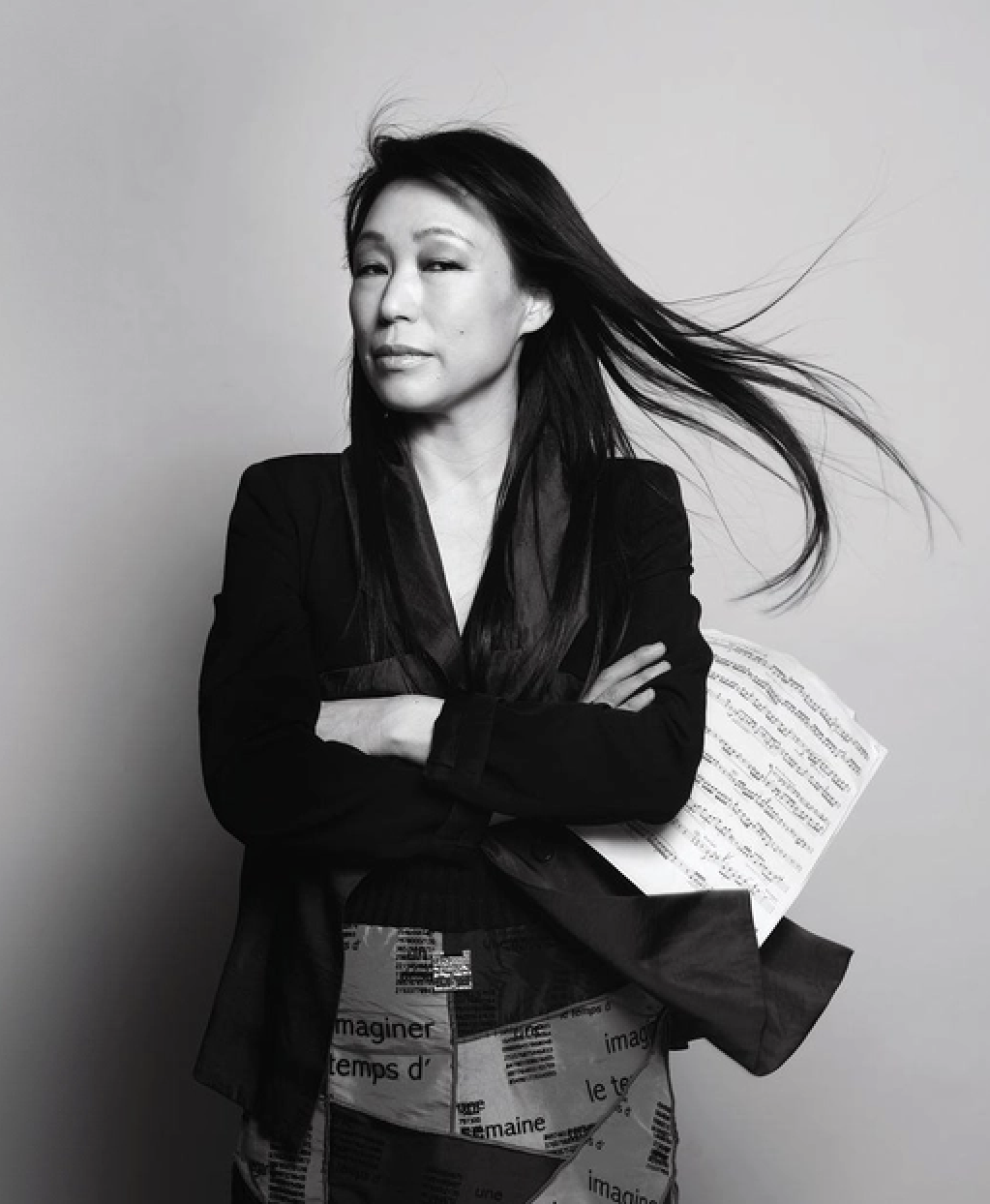
“The word Gougalōn derives from Old High German [the term used for the earliest form of the German language documented in written texts, which was spoken between the years 750 and 1050 A.D.] and inherent in it are the following meanings: to hoodwink; to make ridiculous movements; to fool someone by means of feigned magic; to practice fortune-telling,” says Unsuk Chin (*1961), referring to the title of her work. She was inspired to write the piece during her first trip to China in 2008 and then in 2009, when she visited Hong Kong and Guangzhou. “The atmosphere of the old and poor residential neighbourhoods with their narrow, winding alleys, ambulatory food vendors, and marketplaces – all this not far from supersized video screens, ultramodern buildings, and glittering shopping centres – brought to mind long forgotten childhood experiences. It reminded me very much of Seoul of the 1960s, of the period after the Korean War and before the radical modernisation. Of conditions that no longer exist in today’s (South) Korea. I was particularly reminded of a troupe of entertainers I saw a number of times as a child in a suburb of Seoul. These amateur musicians and actors travelled from village to village in order to foist self-made medicines – which were ineffective at best – on the people. To lure the villagers, they put on a play with singing, dancing, and various stunts. This was all extremely amateurish and kitschy, yet it aroused incredible emotions among the spectators: this is hardly surprising, considering that it was practically the only entertainment in an everyday life marked by poverty and repressive structures. Entertainment electronics and toys (not to mention art) were of course unknown. Therefore, the whole village was present at this “big event”, a circumstance from which others also desired to profit: fortune-tellers, mountebanks, and travelling hawkers. Among these were also wig dealers from whom young girls could earn some money for their families by sacrificing their pigtails. Gougalōn does not refer directly to the dilettante and shabby music of that street theatre. This piece is about an “imaginary folk music” that is stylised, broken within itself, and only apparently primitive,” Chin adds.
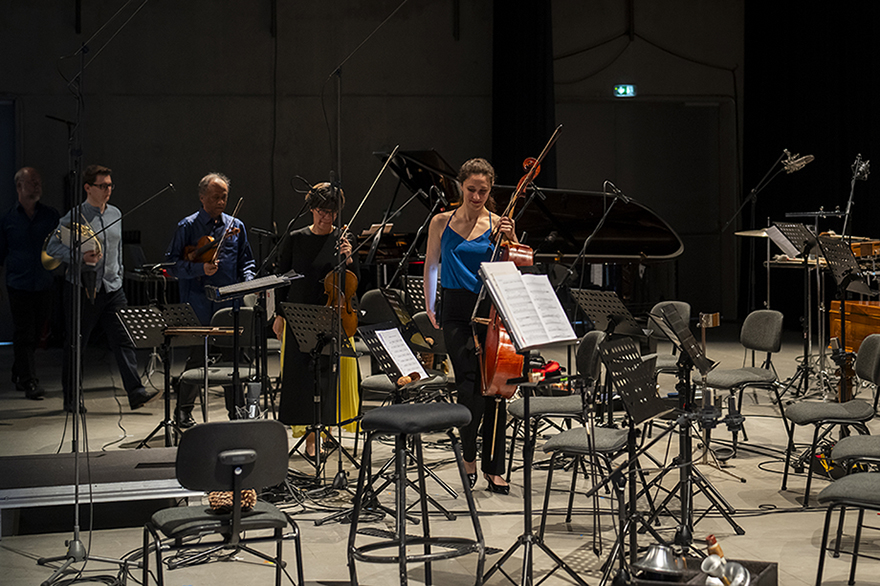
The piece Chamber Nôise by Ondřej Adámek (*1979) is also inspired by Asian theatre, specifically the Japanese Noh music theatre and Bunraku puppet theatre. Written for cello and double bass, its performance requires not only extreme concentration throughout but also proficiency in all manner of playing techniques, allowing the musicians to produce a variety of astonishing sounds; they have to master certain stage gestures as well, which Adámek equates with the movements of Sumo wrestlers. The players likewise sing and recite Buddhist sutras in Chinese and Sanskrit, along with texts in Japanese and French. Ondřej Adámek, whose music will also be performed at the Prague Spring 2026 by the Bavarian Radio Symphony Orchestra with Magdalena Kožená and Simon Rattle, is one of the most respected composers on the scene today. His music is commissioned and performed by some of the world’s finest orchestras, including the BRSO, the Berlin Philharmonic, the London Symphony Orchestra, Ensemble intercontemporain and Ensemble Modern. In the years 2014 and 2015 he was awarded a scholarship at Académie de France and was thus able to work in the renowned Villa Medici in Rome like his famous predecessors Claude Debussy, Lili Boulanger, Eugène Bozza, Henri Dutilleux, Tristan Murail and Bruno Mantovani. Critics describe him as someone “uncompromisingly modernist and yet intensely communicative,” whose music “grabs the listener by the ears and doesn’t let go.”
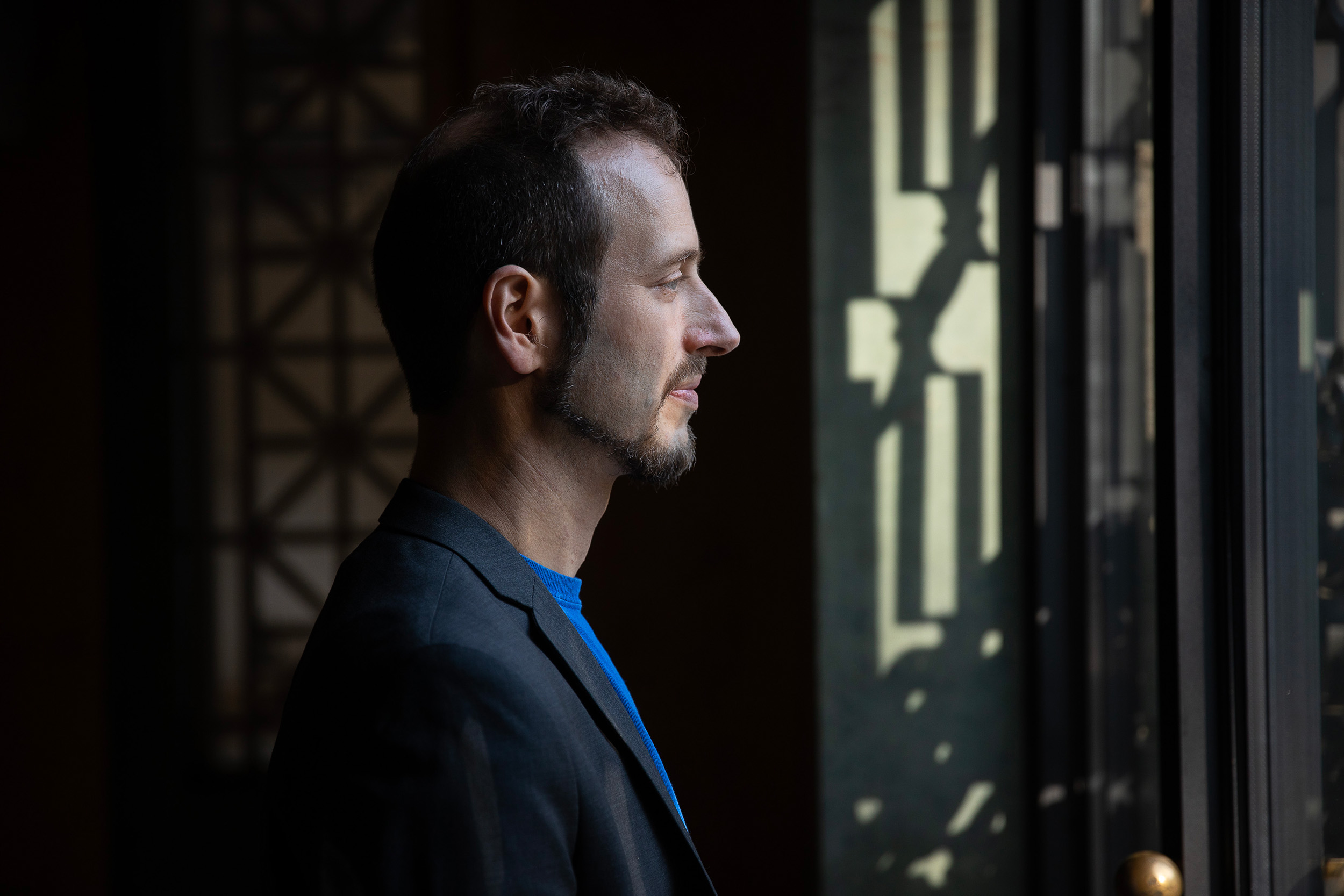
The programme for this concert also promises intriguing new works written expressly for Ensemble Modern and commissioned by the Prague Spring. The composers all have their own unique profile and strong personal style: A resident of Norway, Michaela Antalová is a Slovak composer, percussionist and flautist with a musical background in jazz and improvisation, who projects influences of Slovak folk music into her compositions, including use of the fujara. Young composer Tobiáš Horváth acquired his commission thanks to his victory in Reading Lessons 2025. Based in Prague, Slovak composer and conductor Patrik Kako (*1998) creates uncompromisingly virtuosic music, which has been performed at such festivals as Grafenegg and Klangspuren Schwaz. An extensive composition is in the works from Jiří Kadeřábek (*1978), one of the most original and most unpredictable of Czech composers, who has collaborated during performances of his works with such conductors as Jiří Bělohlávek, Jakub Hrůša and Petr Popelka.
For its unusual diversity of colours, the music of Unsuk Chin, Prague Offspring Composer-in-Residence 2026, is often described as “mysterious” or “new impressionistic”. Her Violin Concerto No. 1 garnered the 2004 Grawemeyer Award, which is considered to be the Nobel Prize in music. This was followed by the Arnold Schoenberg Prize and in 2024 the prestigious Ernst von Siemens Music Prize. Unsuk Chin’s Cello Concerto, commissioned by the BBC Proms and premiered at the festival in 2010 and subsequently released by Deutsche Grammophon, was hailed by critics of Britain’s The Guardian as the twelfth best composition of the 21st century. Chin’s music is performed and commissioned by the world’s finest orchestras and opera houses: The Berlin Philharmonic, the Chicago Symphony Orchestra, the New York and Los Angeles Philharmonics and the Bavarian State Opera. Conductor Kent Nagano is a great admirer and promoter of her music, while Unsuk Chin’s works are also readily presented by other world conductors, such as Sir Simon Rattle, Gustavo Dudamel, Esa-Pekka Salonen, David Robertson and Mirga Gražinytė-Tyla.

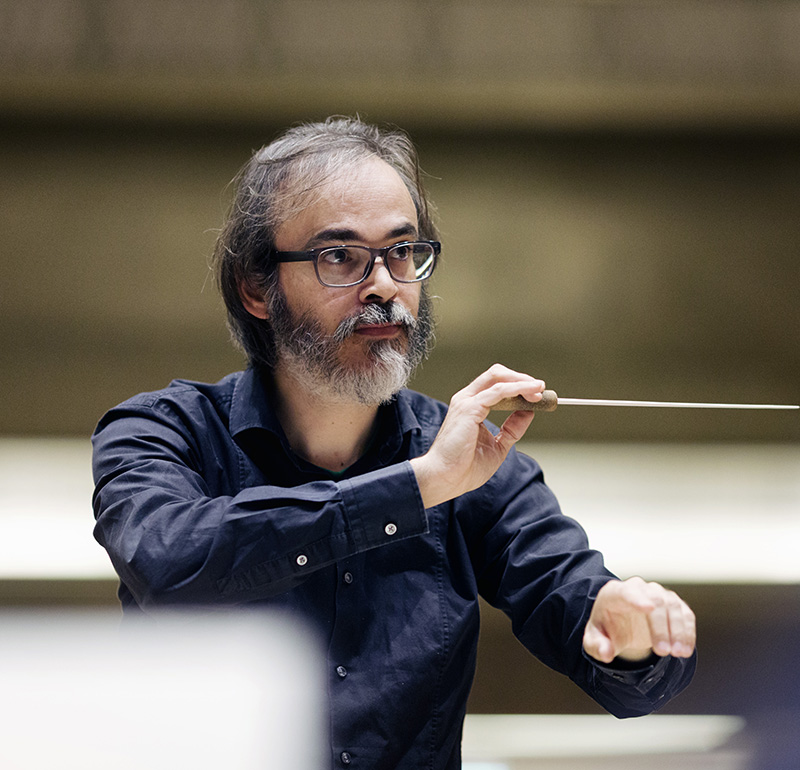
Ilan Volkov became familiar to the general public at only 23 years of age when he was named assistant to the then Music Director of the Boston Symphony Orchestra, Seiji Ozawa. This appointment launched his colourful international career, a fundamental part of which was his tenure with the BBC Scottish Symphony Orchestra, where he held the position of Principal Conductor in the years 2003–2009; in the period 2009-2024 he was Principal Guest Conductor and today he collaborates with the orchestra as Creative Partner. As well as being a respected performer of classical music from previous eras, he is also a key figure on the international contemporary music scene, a genre he promotes assiduously. In 2012 he launched the Tectonics festival, which very soon became one of the world’s most important and most progressive platforms for new music. Under Volkov’s direction Tectonics has grown into a global network of festivals with branches in Glasgow, Reykjavik, Tel Aviv, New York, Oslo, Athens, Kraków and Adelaide, providing an opportunity for meetings between avantgarde composers, improvisers and experimenters from all over the world. Volkov collaborates with the finest ensembles specialising in contemporary music, such as Ensemble Modern, Klangforum Wien and Ensemble intercontemporain. He has performed the premieres of a whole series of works, including those by Unsuk Chin, Missy Mazzoli and Hans Abrahamsen. He is a regular guest at the Salzburg, Lucerne and Edinburgh festivals and the BBC Proms, where he combines traditional and contemporary repertoires. He has earned numerous distinctions for his many recordings, among them several Gramophone Awards.
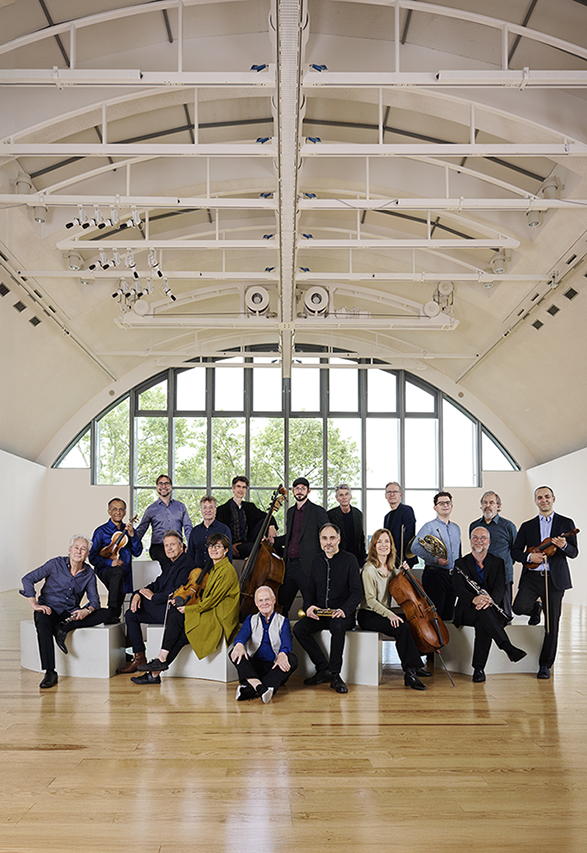
Ensemble Modern has been defining trends on the contemporary music scene for decades now. The British newspaper The Guardian described them as “Frankfurt-based musicians who, for their versatility and virtuosity, have few peers among Europe’s specialist contemporary music groups”. The ensemble was founded in Frankfurt in 1980; today its core consists of eighteen soloists from Belgium, Bulgaria, Germany, Greece, India, Japan, Switzerland and the USA. Each year members of the ensemble study around seventy new works, approximately twenty of which will then be given their world premieres. Typically open to all manner of genres, Ensemble Modern also includes in its programmes music theatre productions, dance performances and multimedia projects. With an extended players’ list the ensemble’s members also perform symphonic works under the name Ensemble Modern Orchestra. Over the decades since they were established almost half a century ago they have cultivated close relationships with leading contemporary composers, among them Unsuk Chin, Olga Neuwirth, Heiner Goebbels, Helmut Lachenmann, Karlheinz Stockhausen, Wolfgang Rihm and Steve Reich. Their recordings of these composers’ works, which Ensemble Modern also releases on its own label, are considered referential. In addition to concerts presented as part of its own subscription series at Frankfurt’s Alte Oper, the ensemble is a regular guest at prestigious festivals and concert venues, including Festival d’Aix-en-Provence, Berliner Festspiele, Holland Festival, London’s Wigmore Hall and South Bank Centre and New York’s Carnegie Hall. In 2003 they launched the International Ensemble Modern Academy, which provides opportunities for all kinds of educational projects, with the aim of sharing and mediating the latest artistic movements and trends in various formats. The Academy offers, for instance, a master’s programme in contemporary music performance at the Hochschule für Musik und Darstellende Kunst in Frankfurt, international composers’ and conductors’ seminars, and educational projects for children and teenagers.