

Sternath & Shani & Rotterdam Philharmonic
The Prague Spring debut of a piano rising star Lucas Sternath, Lahav Shani and the Rotterdam Philharmonic Orchestra in works by Schumann, Brahms and Johan Wagenaar
Programme
- Johan Wagenaar: Cyrano de Bergerac op. 23, overture
- Robert Schumann: Concerto for Piano and Orchestra in A minor Op. 54
- Johannes Brahms: Symphony No. 2 in D major Op. 73
Performers
- Rotterdam Philharmonic Orchestra
- Lahav Shani – conductor
- Lucas Sternath – piano
We regret to announce that, for personal reasons, Mrs Martha Argerich has cancelled all her European concerts during this period and will not be appearing at the Prague Spring.
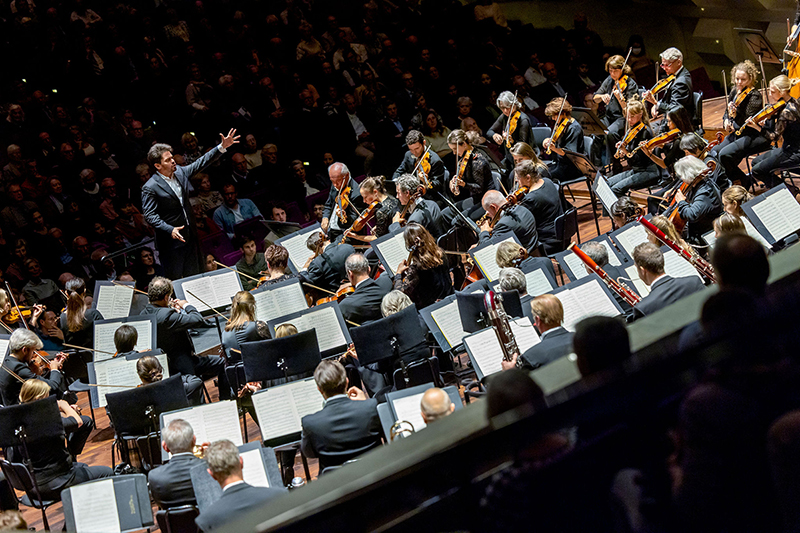
“There is the most complete accord between us… It is not his youth that attracts me: not, perhaps, my flattered vanity. No, it is the fresh mind, the gloriously gifted nature, the noble heart, that I love in him.” This is one of Clara Schumann’s diary entries, however, she is not referring to her husband Robert, but to their mutual friend Johannes Brahms. The programme for the concert given by the Rotterdam Philharmonic Orchestra celebrates these three superb 19th century artists, who were united by love, respect and “divine talent”. Nevertheless, a surprise awaits the audience at the start of the concert – in the form of a piece that is virtually unknown in the Czech Republic, the overture Cyrano de Bergerac by Dutch composer Johan Wagenaar (1862–1941), a work reminiscent of the great Romantic scores of Richard Strauss. And this will be a special Prague Spring evening in other respects as well. Making his Czech debut at the festival is Austrian pianist Lukas Sternath, winner of the 2022 International ARD Music Competition in Munich and holder of the prestigious title ECHO Rising Star 2024. And standing on the Prague Spring rostrum for the first time will be 36-year-old Chief Conductor of the Rotterdam, Israel and Munich Philharmonics, Lahav Shani.
In January 1839, eighteen months before her wedding, Clara wrote to her future husband: “Don’t take it amiss if I tell you that I’ve been seized by the desire to encourage you to write for orchestra. Your imagination and your spirit are too great for the weak piano.” Thus, with Clara’s support, Robert Schumann (1810–1856) entered one of his most productive periods, which ended in 1845 with the composition of his only piano concerto, in many respects a unique piece of writing. Using the Italian spelling, Schumann incorporated the name of his great love and defender, “ChiArA”, into the oboe solo in the first movement; Clara was also the soloist at the work’s premiere in Dresden on 4 December 1845.
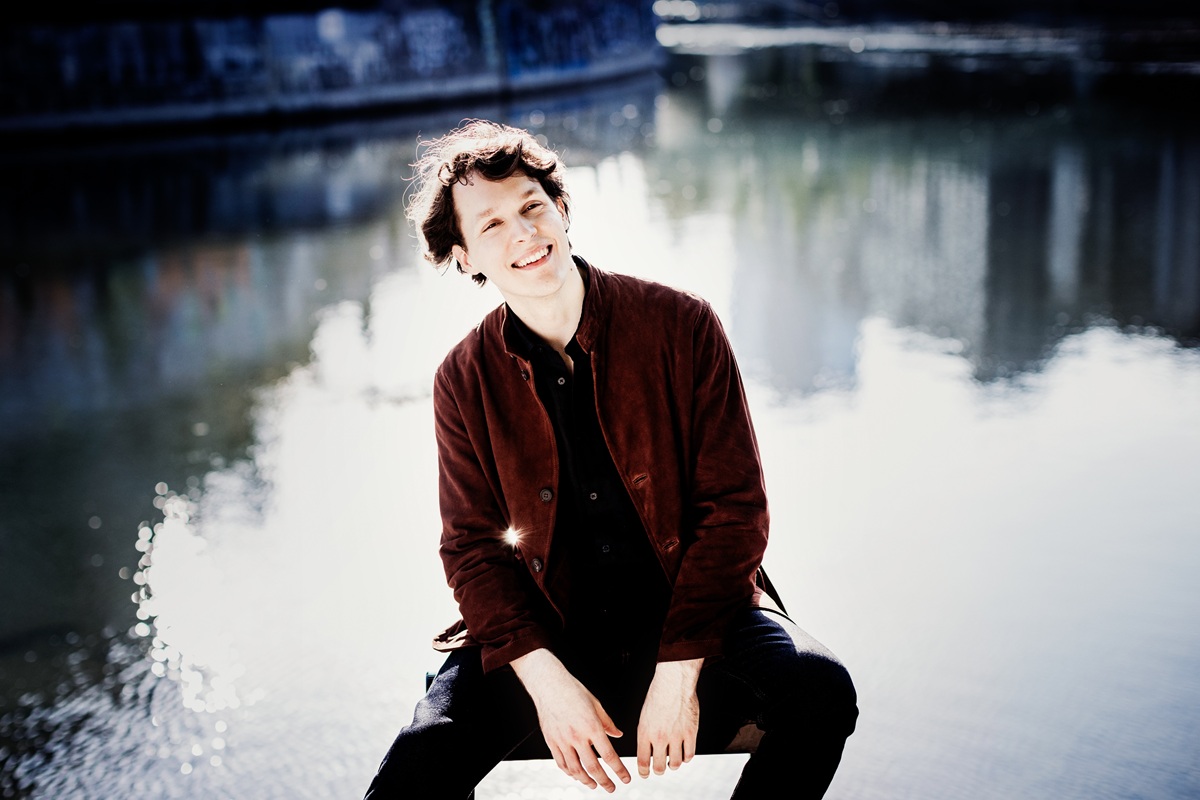
At the Prague Spring the solo part will be undertaken by one of the greatest musical talents on the current classical music scene, Viennese native Lukas Sternath who, at a mere twenty-five years of age, already has numerous debuts to his name, for instance at the Salzburg Festival, the BBC Proms, the Elbphilharmonie, London’s Wigmore Hall and the Vienna Philharmonic.
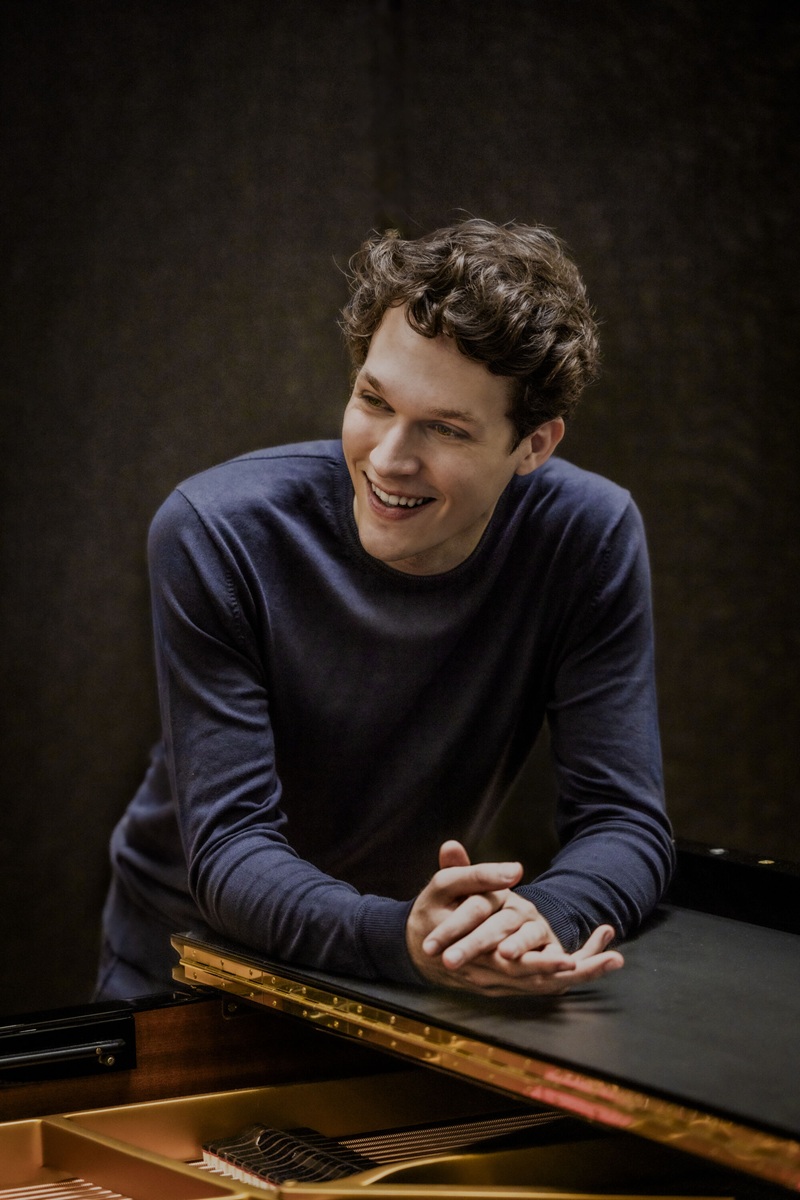
“I try to communicate in the most honest and direct way possible, not just with the audience, but with everything – with the work, the instrument, the hall, the atmosphere, even with myself,” states Lukas Sternath on his approach to classical music, which he grew to appreciate fully during his four years singing in the world-famous Vienna Boys’ Choir. He first sat at the piano aged five, concentrating primarily on jazz improvisation until the age of eleven. He loves Keith Jarrett to this day. At the ARD Competition in Munich in 2022 he won a total of eight prizes, including First Prize and the Audience Prize. One year earlier he garnered multiple awards at the Ferruccio Busoni International Piano Competition in Bolzano, the International Schubert Competition in Dortmund and the European Piano Competition in Bremen. A pupil of Igor Levit and Paul Lewis, he is currently a BBC New Generation Artist and also curator of his own chamber series at Vienna’s Musikverein – a first in the history of this venue. This season he gave his debut with the Vienna Philharmonic, and next season sees him appearing in the USA for the first time, at the famous Chicago Symphony Center where, incidentally, he will perform the same programme he is presenting in Prague on 5 November at the Rudolf Firkušný Piano Festival. This amiable Viennese artist, whose success is still something of a mystery to him, could rank alongside the likes of superb pianists Friedrich Gulda, Sviatoslav Richter or Daniil Trifonov, who gave their Czech debuts at the Prague Spring.
Johannes Brahms (1833–1897) worked on his first symphony for fourteen years, while the second took him five months and, as was his custom, here, too, he kept his cards close to his chest regarding the progress of his composition work. He wrote the following to his publisher: “It will at all events be a proper fiasco, and people will say that, this time, I took it easy. The new symphony is so melancholy that you won’t stand it.” Yet the opposite is true. Thanks to its bright, sonorous key of D major and the wealth of colourful, lyrical themes, the Second Symphony is one of Brahms’s brightest and most optimistic works – “it is all blue sky, babbling of streams, sunshine and cool green shade,” as the composer’s friend Theodor Billroth characterised it. The popular work was part of the repertoire of perhaps all the great conductors of the 20th century, among them Arturo Toscanini, Wilhelm Furtwängler, Herbert von Karajan and Claudio Abbado. It will be fascinating to hear the work performed by the next generation of musicians, represented, for example, by Israeli conductor and pianist Lahav Shani, since 2018 the Chief Conductor of the Rotterdam Philharmonic Orchestra. In 2020 he also assumed the post of Music Director of the Israel Philharmonic which, fifty years previously, was filled by Zubin Mehta, and from this season onwards he is likewise Chief Conductor of the Munich Philharmonic. Shani gave his debut with the Rotterdam Philharmonic in June 2016 and his appointment was announced a mere two months later. He thus became the youngest Chief Conductor in the orchestra’s 108-year history. “It was a performance quite unlike any other,” stated The Guardian, writing about the debut of the then 27-year-old artist. “Shani, like his mentor Daniel Barenboim, is a wonderful pianist as well as conductor, and in this instance played the concerto himself, directing his orchestra from the keyboard… It proved to be a tour de force that bordered on staggering. […] the detailed beauty of the Rotterdam orchestra’s playing spoke volumes.” His recent and forthcoming engagements include appearances with the Vienna and Berlin Philharmonics, the London Symphony Orchestra, the Royal Concertgebouw Orchestra and the Chicago and Boston Symphony Orchestras.
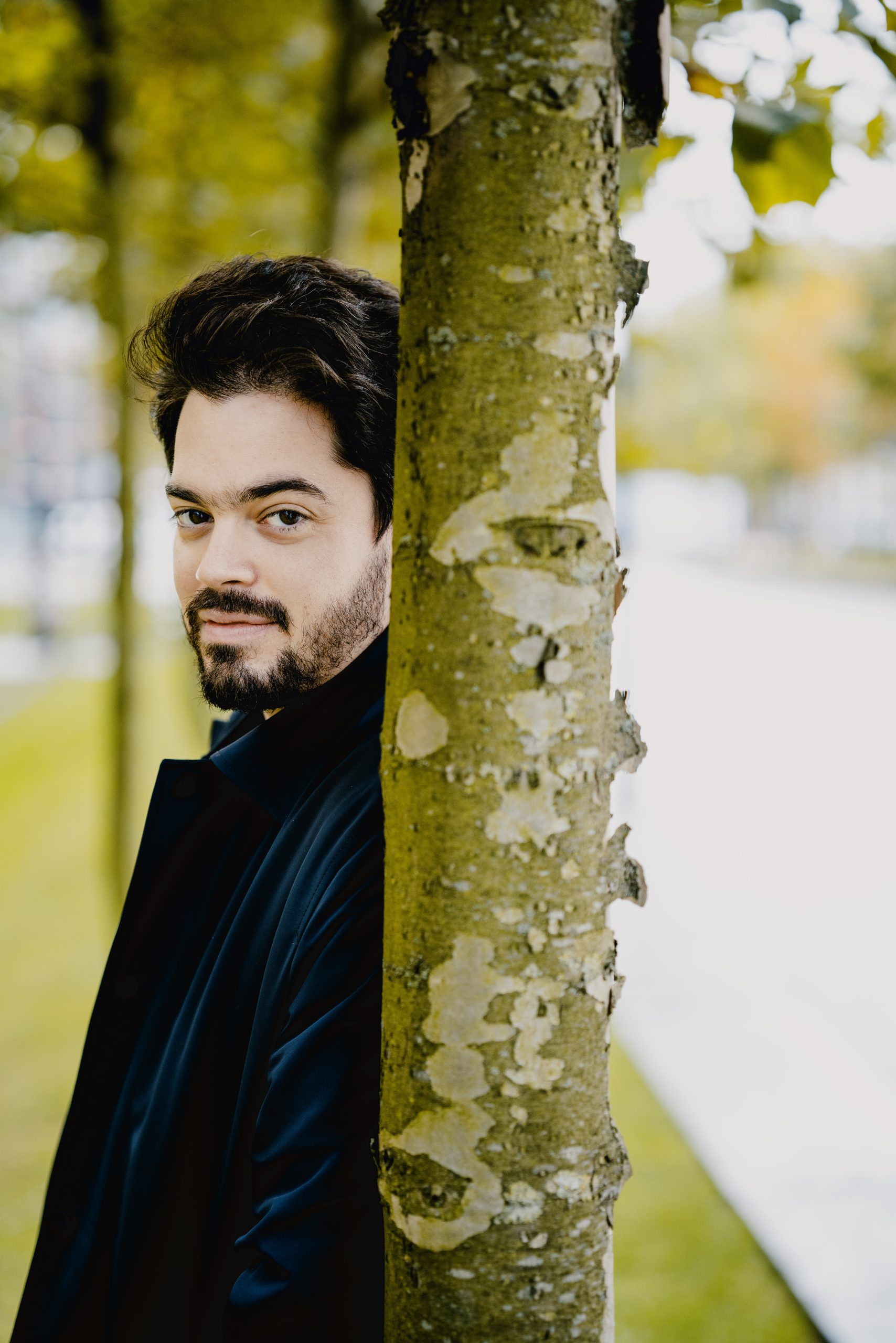
The Rotterdam Philharmonic Orchestra is celebrated both on the Dutch and international scenes for its energetic interpretation and innovative approach towards the kind of projects and community programmes it offers its audiences. During the 1930s the ensemble’s progress was largely credited to Chief Conductor Eduard Flipse, while its international renown was cemented during the eras of Jean Fournet and Edo de Waart in the 1970s. A key period in its development occurred with the arrival of Valery Gergiev in 1995, who was followed in the years 2008–2018 by Yannick Nézet-Séguin. The orchestra’s home is the De Doelen concert hall in Rotterdam, while the RPO also appears regularly in numerous prestigious world venues, such as the Théâtre des Champs-Élysées in Paris, where it assumes the role of Orchestra-in-Residence. Annually it plays to audiences of up to 200,000 people, many of whom are younger listeners, thanks to the orchestra’s various educational programmes. In addition to its commitments on the concert platform, the ensemble also has a fascinating and varied discography, from Eduard Flipse’s pioneering Mahler recordings to new albums released by Deutsche Grammophon, EMI and Virgin Classics.