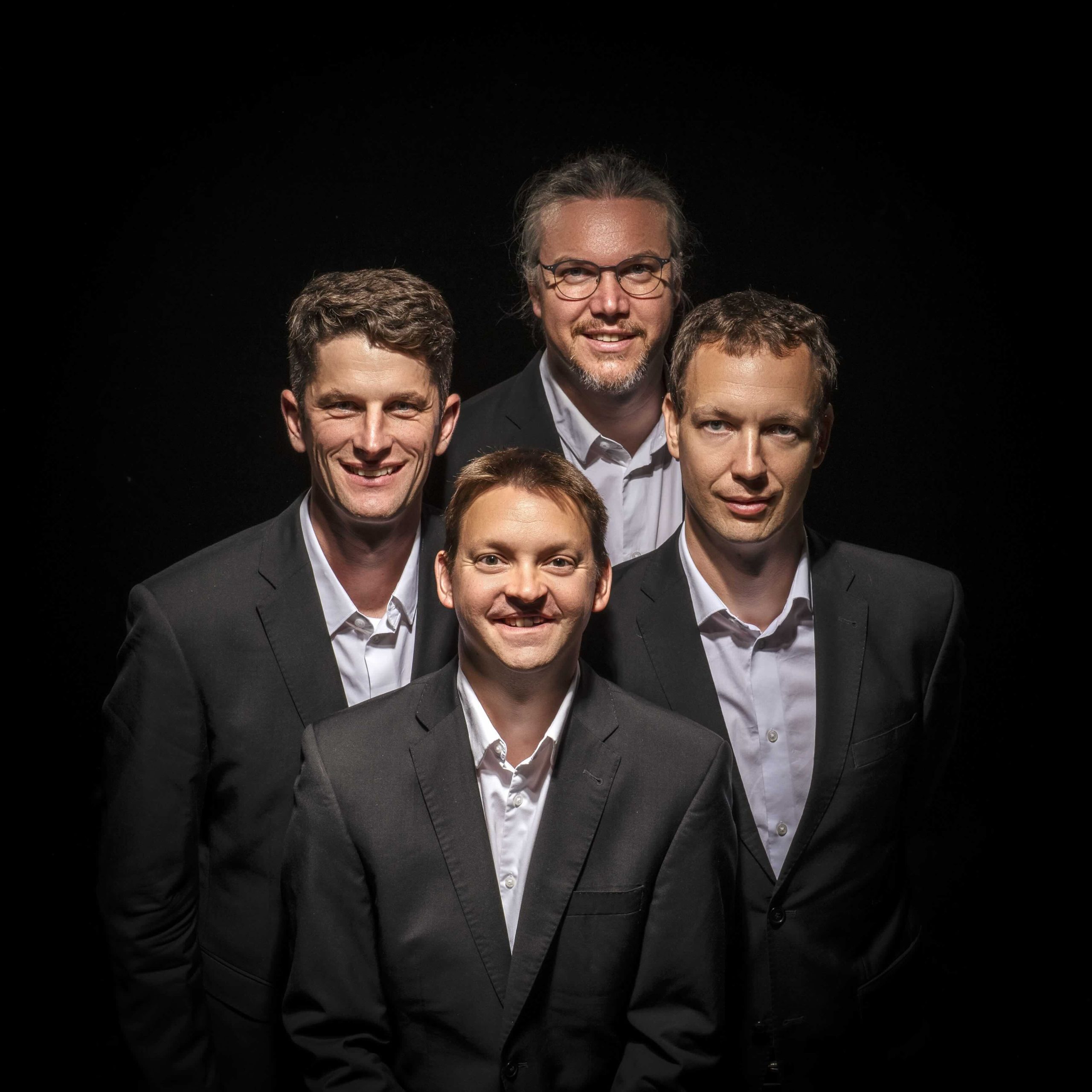

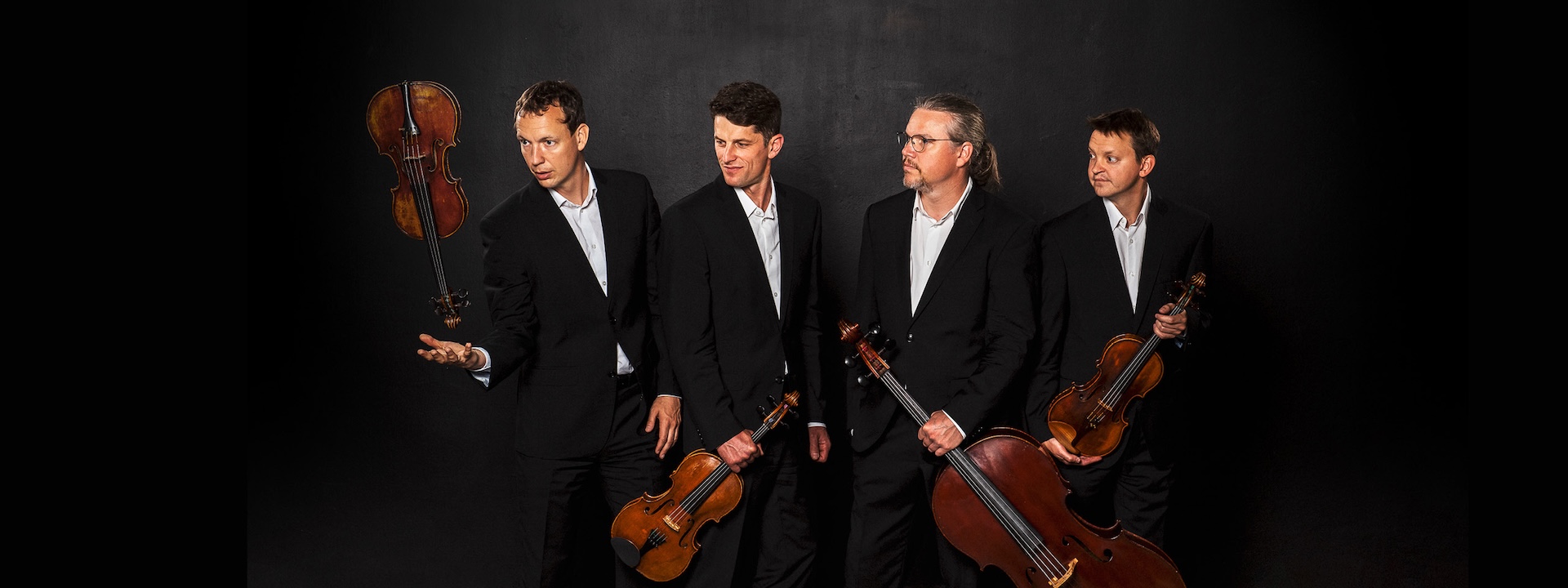
Bennewitz Quartet
Antonín Dvořák, Benjamin Britten – two composers, two messages, two final string quartets. One filled with misgivings, the other full of joy and harmony.
Programme
- Benjamin Britten: String Quartet No. 3 Op. 94
- Antonín Dvořák: String Quartet No. 14 in A flat major Op. 105
Performers
- Bennewitz Quartet
- Jakub Fišer – violin
- Štěpán Ježek – violin
- Jiří Pinkas – viola
- Štěpán Doležal – violoncello
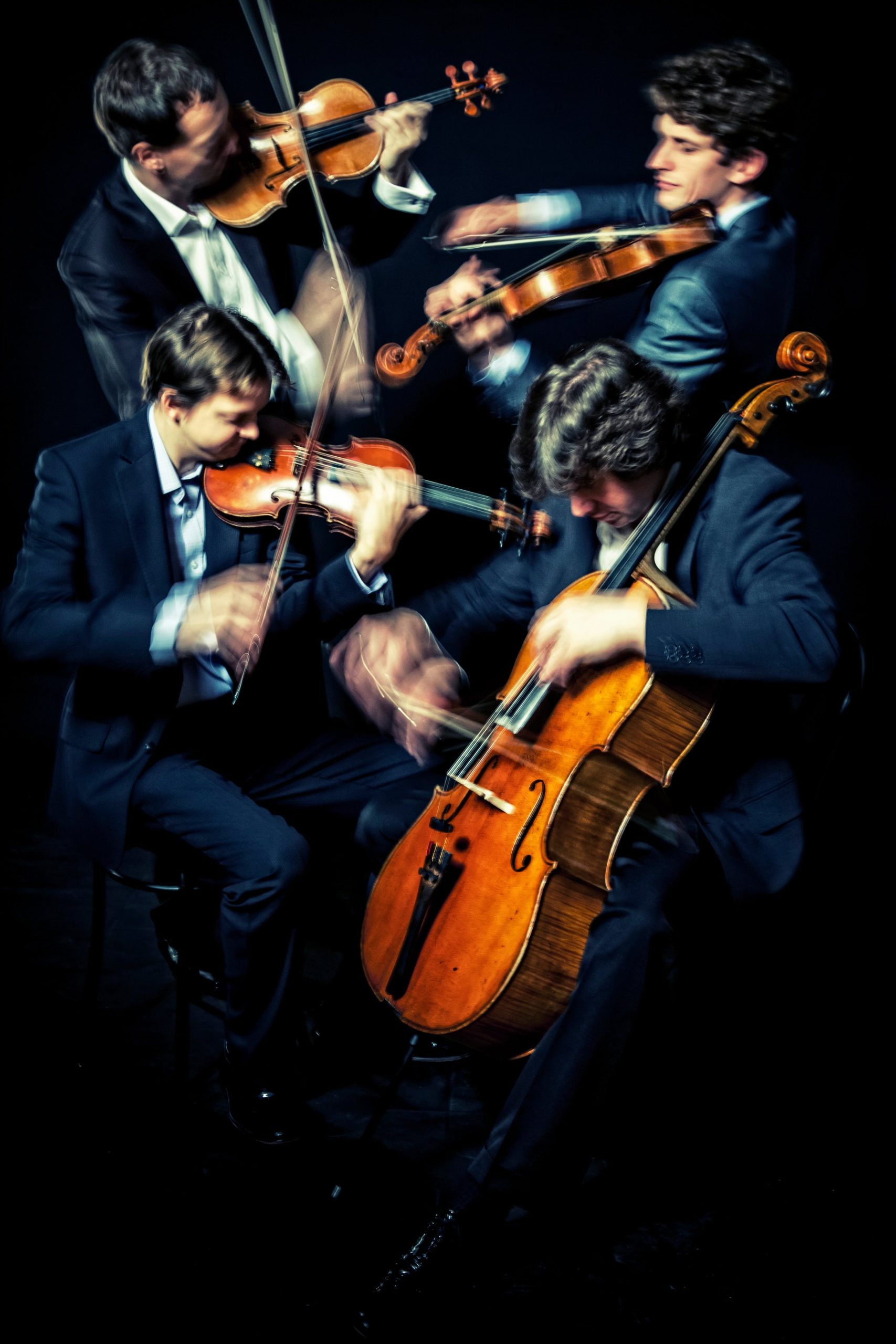
“An ensemble that one could spontaneously count as one of the best one has ever heard.” “Perfect mastery of style and real experience of this repertoire.” “The Bennewitz quartet is downright wonderful, with a perfect balance of warmth and objective clarity.” This is how one of the finest Czech string quartets is described by the prestigious world media: the German Süddeutsche Zeitung, French Diapason and British Gramophone. The Bennewitz Quartet is undeniably one of the best that the fertile and successful Czech quartet school currently has to offer. In 2026 the ensemble returns to the festival with a programme structured exclusively for the Prague Spring. In the attractive surroundings of St Agnes’ Convent they will perform the final string quartets of British composer Benjamin Britten and Antonín Dvořák.
String Quartet No. 3 is not only the final quartet, but also the last major work by Benjamin Britten (1913–1976). The five-movement structure and the seemingly light character of the music suggest Classical divertimentos. However, alongside the playfulness Britten retained despite his illness, even in his advanced years, the work stands out for its experimental sound, its personal references and profound nostalgia. The British composer wrote the first four movements at Chapel House in Horham, Suffolk. The last movement, subtitled “La Serenissima”, was written in the famous Hotel Danieli in his beloved Venice. Here he incorporated a quotation from his opera Death in Venice, based on the novella of the same name by Thomas Mann. In all likelihood, however, this is not a further exploration of the destiny of Gustav von Aschenbach, but instead a moving farewell to tenor Peter Pears, Britten’s life partner and muse for more than forty years. Pears described the quartet in a letter as a work “of a profound beauty more touching than anything else, radiant, wise, new, mysterious – overwhelming”. The composer did not live to see the work’s premiere. It was performed for the first time by the famous Amadeus Quartet in December 1976, two weeks after Britten’s death.
Antonín Dvořák (1841–1904) began sketching his final chamber work, String Quartet No. 14 in A flat major, in March 1895 just before he was due to leave New York. However, after completing 111 bars, he laid it aside and only returned to the sketch in December of that year, once back in Prague. This piece, today rightly regarded as one of the finest quartets in existence, excels for its melodic invention, masterfully conceived form and for the way in which it emanates the composer’s joy and relief at the thought of seeing his children and family once again, which he expressed with the words: “Almighty God has granted us this joyful moment, and thus we all feel indescribably happy.” The second movement is sometimes described as Dvořák’s most inspiring scherzo, in which we will hear echoes of the familiar lullaby from the opera The Jacobin. The premiere was performed in the autumn of 1896 by the Czech Quartet comprising Karel Hoffman and Josef Suk (violins), Oskar Nedbal (viola) and Hanuš Wihan (violoncello).
“These works represent two completely different perspectives on the final chapter of the composers’ musical careers and life journeys. Britten says his farewell quietly and introspectively; his music brings melancholy, restlessness and questions for which there are no answers. In contrast, Dvořák’s work radiates joy, positive energy and triumphant creative fulfilment. The quartet celebrates Dvořák’s return home after a long trip and closes the composer’s period of absolute music with a joyous and definitive gesture. Both authors are sending us a message through the string quartet form – one filled with misgivings and questions, the other full of smiles and cheerful harmony,” states Bennewitz Quartet violist Jiří Pinkas. The high standard of this ensemble is well documented, having cemented their reputation via their triumphs in competition in Osaka, Japan (2005), and at the Premio Paolo Borciani competition in Italy (2008). Since that time the ensemble has been a regular guest in concert at London’s Wigmore Hall, Vienna’s Musikverein, Berlin’s Konzerthaus, the Théâtre des Champs-Elysées in Paris and the Frick Collection in New York. They have performed at the Salzburg and Lucerne festivals and are highly successful on the domestic music scene. In 2004 they received an award from the Czech Chamber Music Society (affiliated to the Czech Philharmonic), and in 2019 they won the Classic Prague Award for chamber performance of the year. Their concert at the Prague Spring thus promises a real treat for anyone who loves chamber music.