
Prague Offspring: Ensemble Modern I
Two key works by Unsuk Chin, Iannis Xenakis’s famous Rebonds, and a world premiere from Michal Nejtek. Ensemble Modern is conducted by Ilan Volkov
Programme
- Unsuk Chin: Akrostichon-Wortspiel
- Michal Nejtek: Die Hintergedanken (world premiere)
- Iannis Xenakis: Rebonds
- Unsuk Chin: Double Concerto for piano, percussion and ensemble
Performers
- Ensemble Modern
- Ilan Volkov – conductor
- Sarah Aristidou – soprano
- Orlando Bass – piano
- David Haller – percussion
- Rainer Römer – percussion
Concerts and events of Prague Offspring 2026
29/5/2026 – 6.30 pm, UNSUK CHIN IN CONVERSATION
29/5/2026 – 8 pm, ENSEMBLE MODERN I
30/5/2026 – 2 pm, READING LESSONS – ENSEMBLE MODERN
30/5/2026 – 6 pm, MASTERCLASS – ENSEMBLE MODERN
30/5/2026 – 6.30 pm, HOW TO SPRING OFF? DISKUZE
30/5/2026 – 8 pm, ENSEMBLE MODERN II
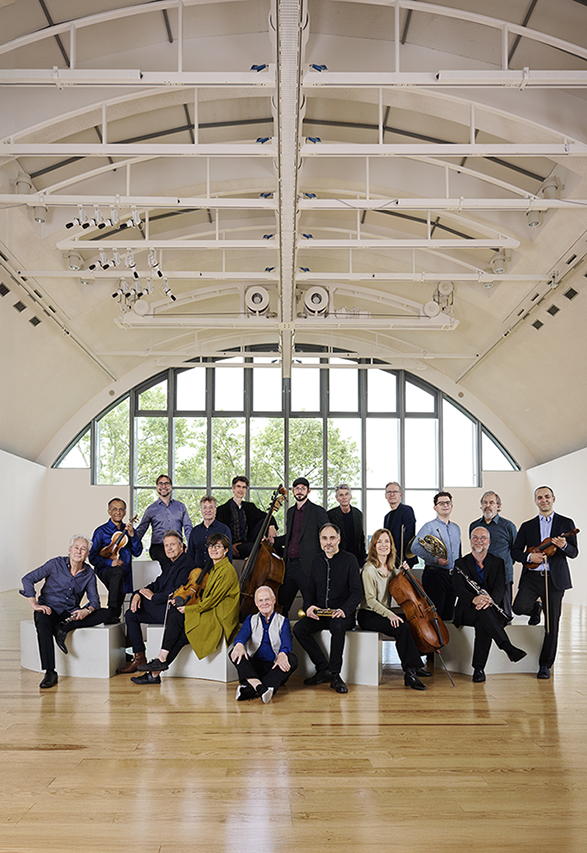
The performance given by Ensemble Modern at Prague Offspring 2025 was simply sensational. “To be left speechless by their artistry as players […] is entirely irrelevant, given that this is one of the finest ensembles in the world specialising in contemporary music,” wrote a critic on the KlasikaPlus website. “Yet it has to be said that perhaps no-one present was prepared for the level of expressivity and the resoluteness with which they performed the works (which were in certain places extremely difficult).” In 2026 the ensemble returns to the Prague Spring to take up their residency for a second year, and on this occasion they bring with them one of the most distinctive figures on the contemporary music scene, South Korean composer Unsuk Chin. This artist, who has received the highest honours any living composer could attain, states that music is “a reflection of my dreams […] a play of light and colours floating through the room”. The first Prague Offspring concert presents two of her key compositions: Akrostichon-Wortspiel from 1991 and Double Concerto for piano, percussion and ensemble from 2002. The programme also features the famous piece Rebonds by Greek-French composer Iannis Xenakis and the world premiere of a new, extensive composition commissioned by the Prague Spring from Czech composer Michal Nejtek. This time Ensemble Modern will be conducted by Ilan Volkov, regarded as one of the greatest living authorities on contemporary music.
For its unusual diversity of colours, the music of Unsuk Chin (*1961) is often described as “mysterious” or “new impressionistic”. Her Violin Concerto No. 1 garnered the 2004 Grawemeyer Award, which is considered to be the Nobel Prize in music. This was followed by the Arnold Schoenberg Prize and in 2024 the prestigious Ernst von Siemens Music Prize. Unsuk Chin’s Cello Concerto, commissioned by the BBC Proms and premiered at the festival in 2010 and subsequently released by Deutsche Grammophon, was hailed by critics of Britain’s The Guardian as the twelfth best composition of the 21st century. Chin’s music is performed and commissioned by the world’s finest orchestras and opera houses: The Berlin Philharmonic, the Chicago Symphony Orchestra, the New York and Los Angeles Philharmonics and the Bavarian State Opera. Conductor Kent Nagano is a great admirer and promoter of her music, while Unsuk Chin’s works are also readily presented by other world conductors, such as Sir Simon Rattle, Gustavo Dudamel, Esa-Pekka Salonen, David Robertson and Mirga Gražinytė-Tyla.
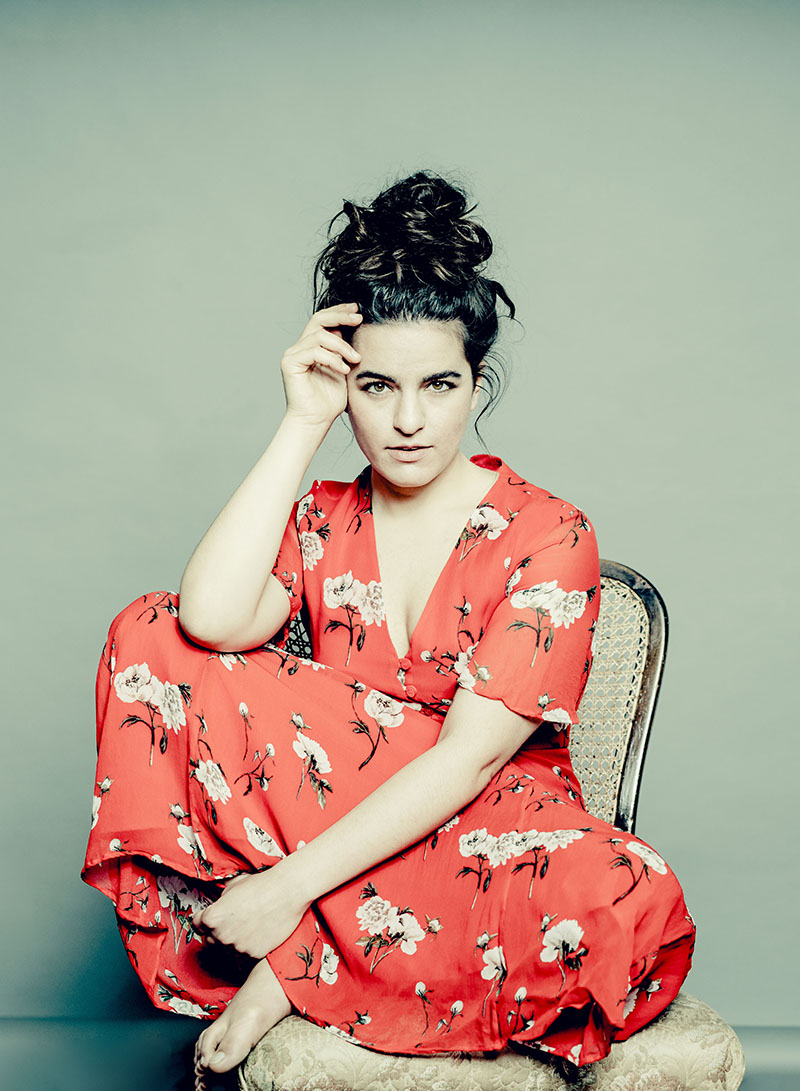
The fact that contemporary music can be innovative, playful, adventurous and daring in equal parts is evident right from the start with the first piece on tonight’s programme, Akrostichon-Wortspiel (Acrostic-Wordplay) for soprano and instrumental ensemble, whose specific sound is determined, among others, by special tuning and the use of instruments such as the mandolin and the harmonica (mouth organ). Unsuk Chin wrote the piece in the early 1990s to texts from the novel Through the Looking-Glass by her beloved author Lewis Carroll and from the fantasy adventure The Neverending Story by Michael Ende. “The selected texts have been worked upon in different ways,” she says. “Sometimes the consonants and vowels have been randomly joined together, at other times the words have been read backwards so that the symbolic meaning alone remains. Each of the seven pieces is constructed around a controlling pitch centre but in their means of expression they are fully differentiated from one another. Seven different situations of emotional states, as described in the fairytales, ranging from the bright to the grotesque, are brought to expression.” Akrostichon-Wortspiel has literally travelled the world, performed by the likes of Ensemble Modern, the Los Angeles Philharmonic and the Philharmonia Orchestra in London.
The Double Concerto for piano, percussion and ensemble also makes the most of special sound effects, where certain strings in the body of the piano are modified in order to sound percussive. Like the majority of her works, here, too, Chin endeavours to create a combination of colours which defy the European perception of music and manifest her affinity with non-European cultures of the East.
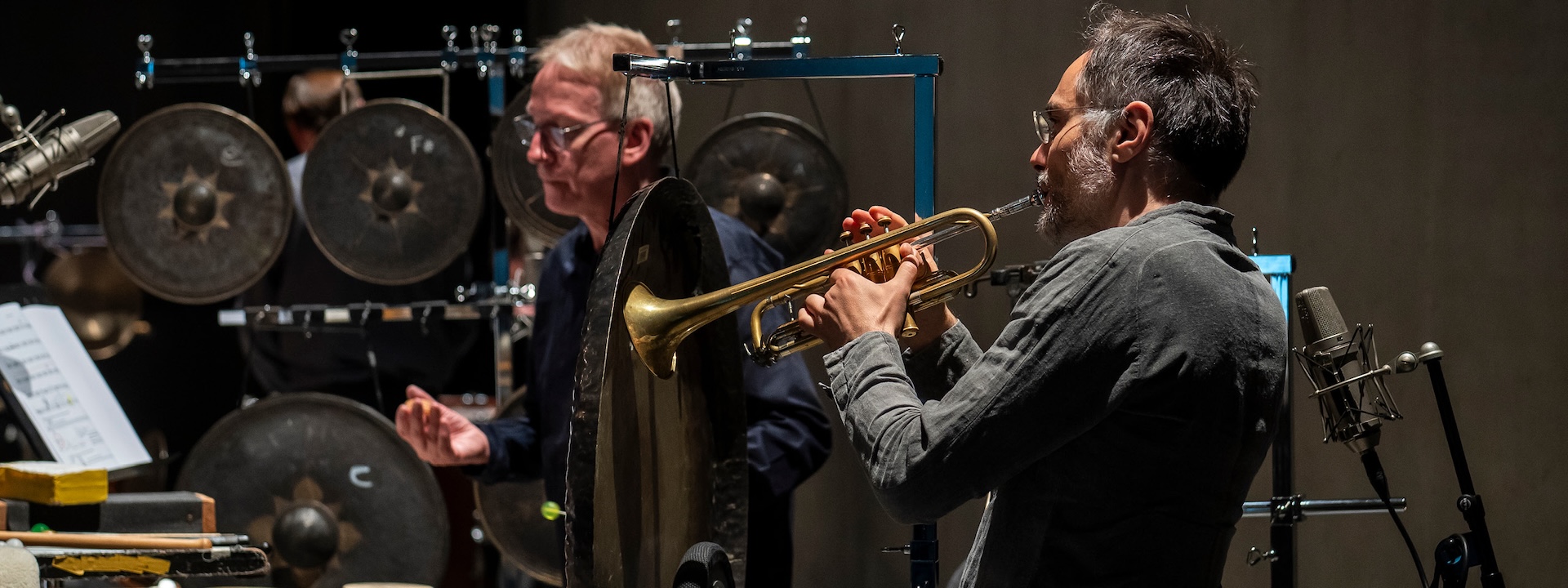
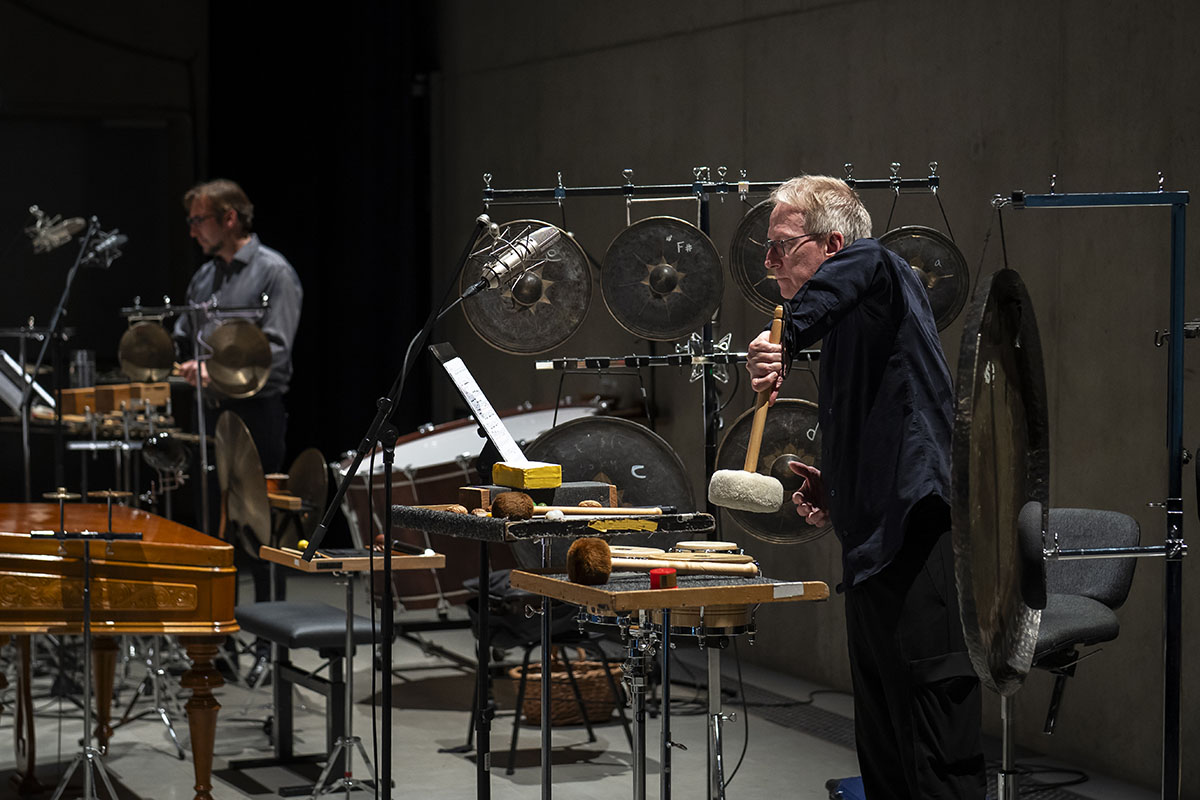
Percussion instruments are also dominant in the extraordinarily focused, virtuosic piece Rebonds by Greek-French composer and graduate of the National Technical University in Athens, Iannis Xenakis (1922–2001). In order to master this two-part composition, in which each part introduces a completely different emotion and type of concentration, the percussionist requires not only flawless technique and whole body coordination, but also the ability to work deftly with the intensity of sound and also with time. It’s such a heightened experience that, even though the whole piece is performed by a single player, if you close your eyes, you imagine you’re hearing an entire ensemble of percussion instruments.
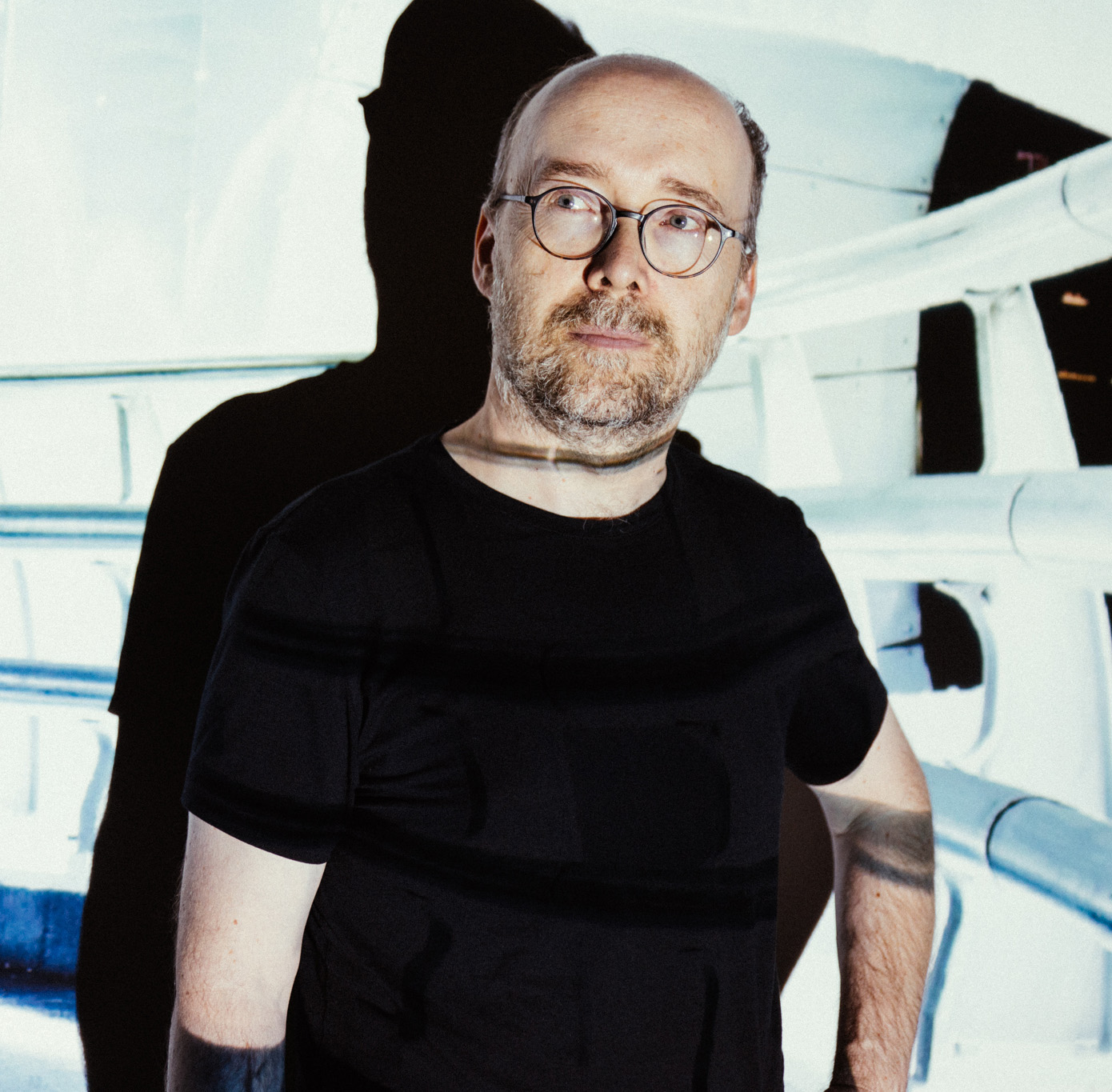
Composer and pianist Michal Nejtek (*1977) is inspired by “everything that is original, truthful and strong”, whether this is jazz, rock, alternative or mediaeval music. Although it might seem that his own compositions would consist in genre fusions, the opposite is true: “For me, it’s much more interesting to marvel at the differences and distances between genres than to create a haphazard mélange of a piece,” he says. Despite this, his music universally conveys his great flexibility, experience and broad outlook as a musician which, together with his considerable invention, allow him to create exceptional compositions. It will indeed be fascinating, in fact, thrilling to hear the new work he is writing for Ensemble Modern who, as superb players, always offer composers great potential as performers. Nejtek’s compositions have featured at a number of prestigious international contemporary music festivals such as Donaueschinger Musiktage, Warsaw Autumn and Klangspuren Schwaz. He wrote the opera Rules for Good Manners in the Modern World for Brno’s National Theatre, and the symphony The Basement Sketches for the Brno Philharmonic. He writes regularly for the MoEns ensemble and Berg Orchestra, and he collaborates with the Agon Orchestra, Michal Pavlíček & Trio, the jazz-rock trio NTS and the band The Plastic People of the Universe. As a composer of music for the theatre he has worked with stage directors Arnošt Goldflam, Jiří Ornest, Jiří Havelka, Jiří Adámek and the duo SKUTR. For the Prague Spring he wrote the piece Ultramarine, premiered in 2018 by the Warsaw Philharmonic, and also Trobairitz, written to texts by medieval female troubadours, which was premiered by the Tiburtina Ensemble in 2022 as part of the project Visions and Dreams and was subsequently released on CD. Among other things, with Ensemble Modern he shares a passion for the music of Frank Zappa.
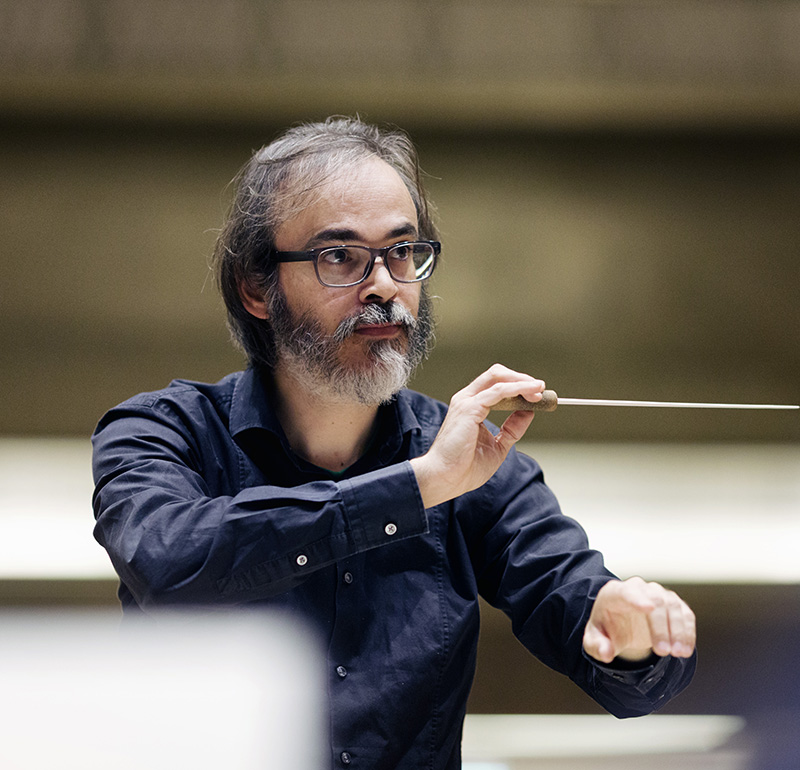
Ilan Volkov became familiar to the general public at only 23 years of age when he was named assistant to the then Music Director of the Boston Symphony Orchestra, Seiji Ozawa. This appointment launched his colourful international career, a fundamental part of which was his tenure with the BBC Scottish Symphony Orchestra, where he held the position of Principal Conductor in the years 2003–2009; in the period 2009–2024 he was Principal Guest Conductor and today he collaborates with the orchestra as Creative Partner. As well as being a respected performer of classical music from previous eras, he is also a key figure on the international contemporary music scene, a genre he promotes assiduously. In 2012 he launched the Tectonics festival, which very soon became one of the world’s most important and most progressive platforms for new music. Under Volkov’s direction Tectonics has grown into a global network of festivals with branches in Glasgow, Reykjavik, Tel Aviv, New York, Oslo, Athens, Kraków and Adelaide, providing an opportunity for meetings between avantgarde composers, improvisers and experimenters from all over the world. Volkov collaborates with the finest ensembles specialising in contemporary music, such as Ensemble Modern, Klangforum Wien and Ensemble intercontemporain. He has performed the premieres of a whole series of works, including those by Unsuk Chin, Missy Mazzoli and Hans Abrahamsen. He is a regular guest at the Salzburg, Lucerne and Edinburgh festivals and the BBC Proms, where he combines traditional and contemporary repertoires. He has earned numerous distinctions for his many recordings, among them several Gramophone Awards.
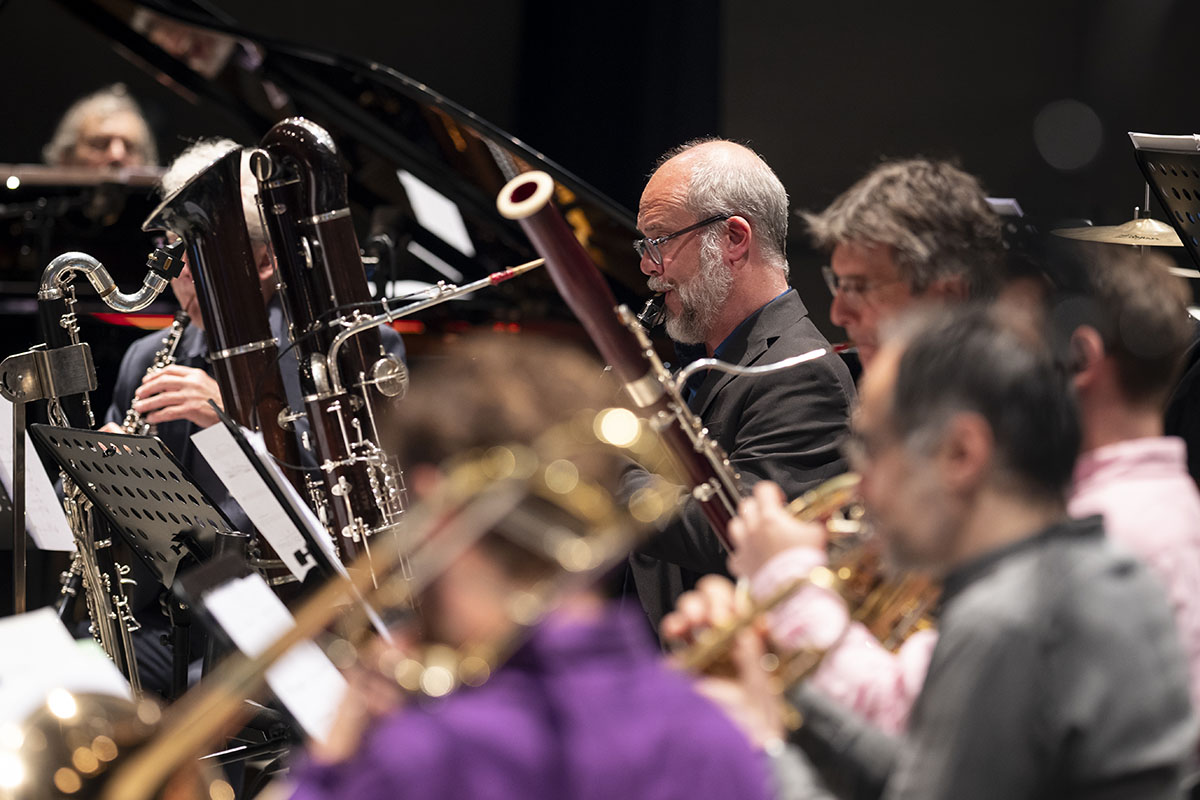
Ensemble Modern has been defining trends on the contemporary music scene for decades now. The British newspaper The Guardian described them as “Frankfurt-based musicians who, for their versatility and virtuosity, have few peers among Europe’s specialist contemporary music groups”. The ensemble was founded in Frankfurt in 1980; today its core consists of eighteen soloists from Belgium, Bulgaria, Germany, Greece, India, Japan, Switzerland and the USA. Each year members of the ensemble study around seventy new works, approximately twenty of which will then be given their world premieres. Typically open to all manner of genres, Ensemble Modern also includes in its programmes music theatre productions, dance performances and multimedia projects. With an extended players’ list the ensemble’s members also perform symphonic works under the name Ensemble Modern Orchestra. Over the decades since they were established almost half a century ago they have cultivated close relationships with leading contemporary composers, among them Unsuk Chin, Olga Neuwirth, Heiner Goebbels, Helmut Lachenmann, Karlheinz Stockhausen, Wolfgang Rihm and Steve Reich. Their recordings of these composers’ works, which Ensemble Modern also releases on its own label, are considered referential. In addition to concerts presented as part of its own subscription series at Frankfurt’s Alte Oper, the ensemble is a regular guest at prestigious festivals and concert venues, including Festival d’Aix-en-Provence, Berliner Festspiele, Holland Festival, London’s Wigmore Hall and South Bank Centre and New York’s Carnegie Hall. In 2003 they launched the International Ensemble Modern Academy, which provides opportunities for all kinds of educational projects, with the aim of sharing and mediating the latest artistic movements and trends in various formats. The Academy offers, for instance, a master’s programme in contemporary music performance at the Hochschule für Musik und Darstellende Kunst in Frankfurt, international composers’ and conductors’ seminars, and educational projects for children and teenagers.