
Simon Rattle & BRSO
A romantic symphony by Robert Schumann, set in contrast with the vibrant firework display in Igor Stravinsky’s music for the ballet The Firebird
Programme
- Robert Schumann: Symphony No. 2 in C major Op. 61
- Igor Stravinsky: The Firebird, ballet music
Performers
- Symphonieorchester des Bayerischen Rundfunks
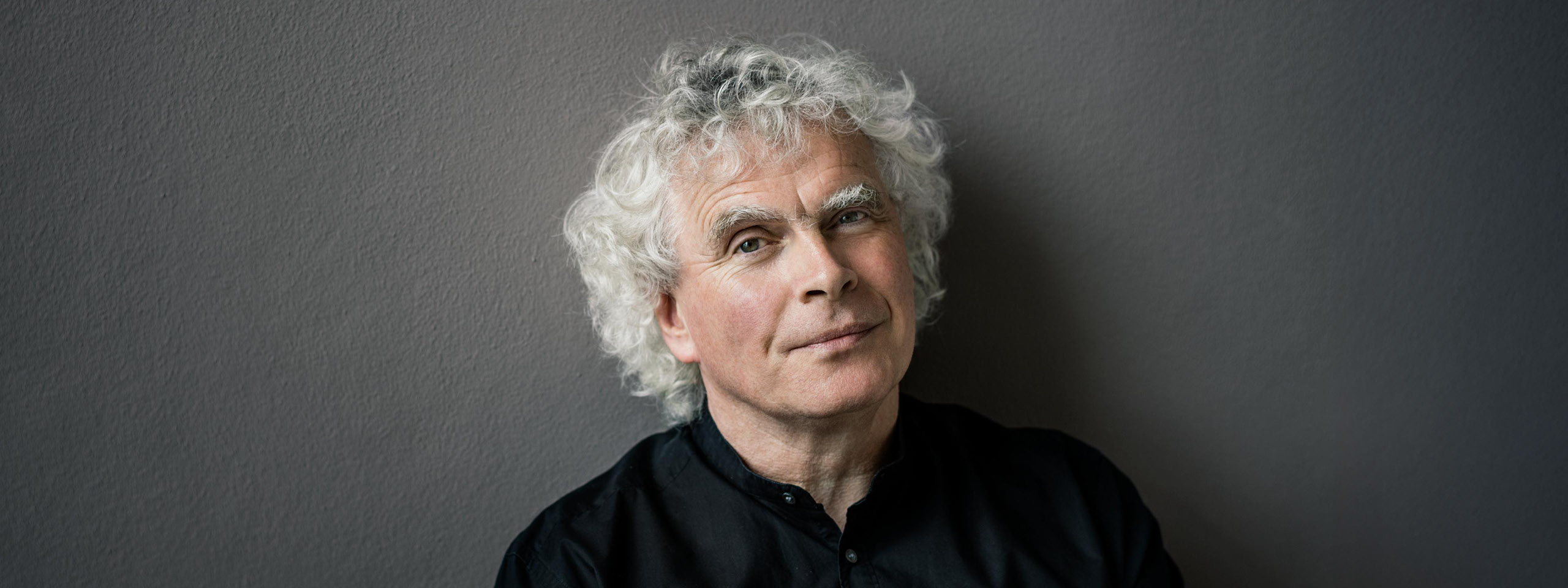
- Sir Simon Rattle – conductor
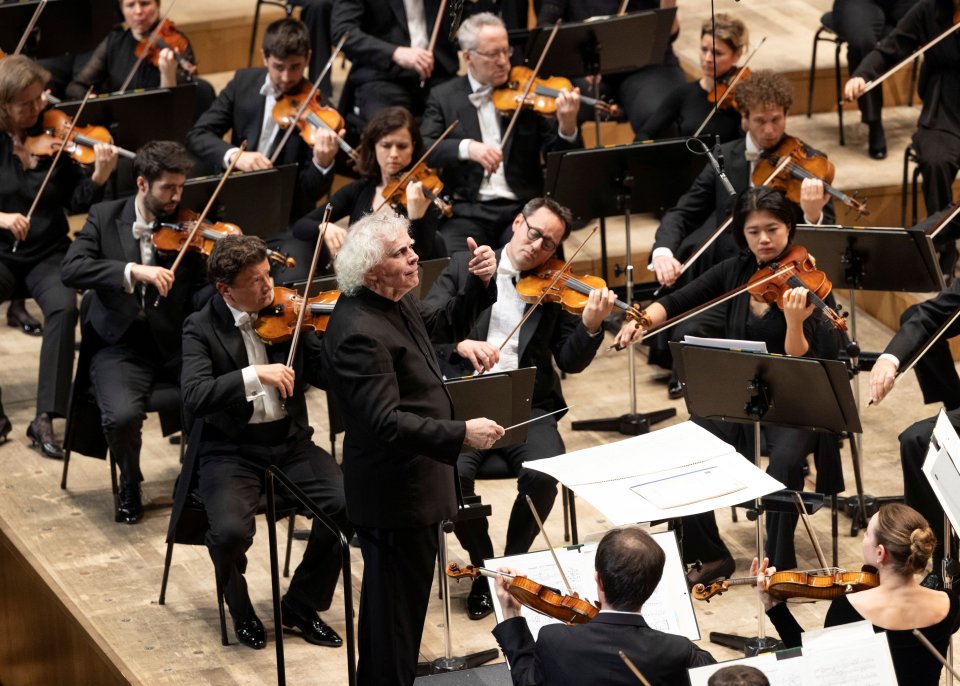
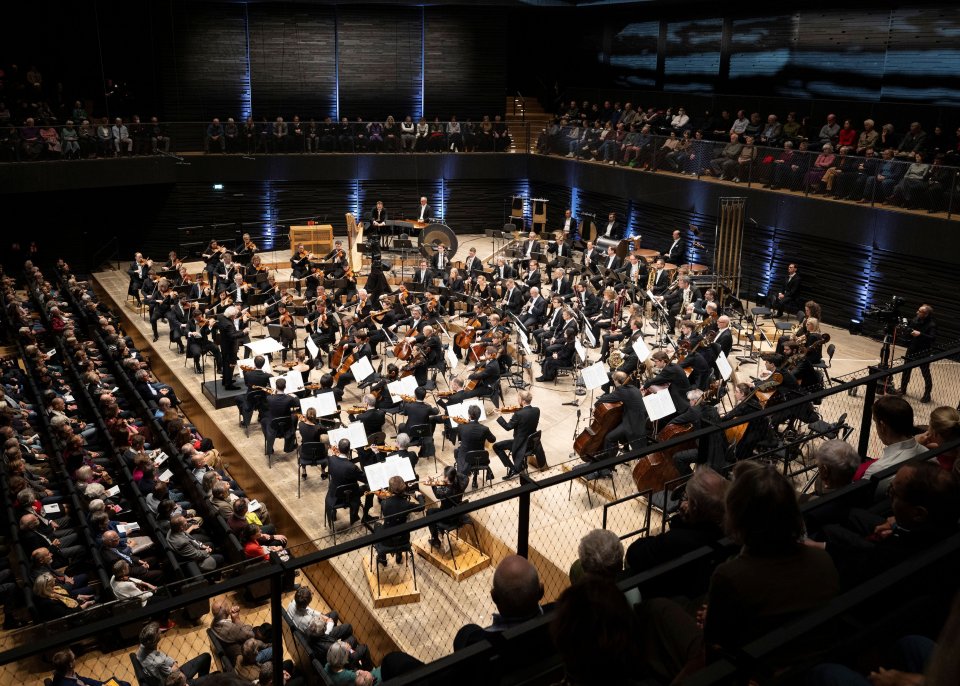
The programme for the second Prague Spring concert by the Bavarian Radio Symphony Orchestra (BRSO), internationally regarded as one of the three greatest orchestras in the world, sees Chief Conductor Sir Simon Rattle placing the inward, restless Second Symphony by German Romantic Robert Schumann in juxtaposition with Igor Stravinsky’s spectacular, vibrantly colourful music for the ballet based on the Russian folk tale about the Firebird. The audience will thus be given a unique opportunity to experience the exceptional technique, exquisite sound and stylistic flexibility of the Munich-based orchestra, whose qualities are due in large part also to Rafael Kubelík, Czech conductor and founder of the Prague Spring.
“Schumann’s Second Symphony is one of those pieces that touch on existential matters. He wrote it after a serious mental breakdown, and it is probably the most profound of his four symphonies,” says Simon Rattle, referring to the first item on the programme. The work is indeed the result of the profound inner unease that Robert Schumann (1810–1856) himself described to his friend Felix Mendelssohn in a letter in September 1845: “For several days, there has been much trumpeting and drumming within me. I don’t know what will come of it.” The composer’s progress on the symphony was interrupted by his repeated bouts of depression and anxiety, his headaches and also his hearing difficulties. Although the entire piece was sketched within a mere two weeks in December 1845, the symphony was only completed shortly before its premiere, held on 5 November 1846 in the Leipzig Gewandhaus. In its day the symphony, strongly influenced by the composer’s intensive study of counterpoint (Schumann called this period “Fugenpassion”) and by his enthusiasm for the Symphony in C major “The Great” by Franz Schubert, was likened by critics to Beethoven’s Fifth and Mozart’s Jupiter Symphony.
The music for the ballet The Firebird, based on motifs from old Russian folklore, was written by the then 27-year-old, relatively unknown composer Igor Stravinsky (1882–1971) as a commission from Sergei Diaghilev’s Ballets Russes. Diaghilev dreamed of creating a devastating work that would be invigorating and, at the same time, fundamentally Russian, thus he chose the story of the Firebird, which symbolised rebirth, beauty and magic. Stravinsky worked on the ballet in close symbiosis with choreographer Michel (Mikhail) Fokine and produced a work for large orchestra of immensely colourful instrumentation, which included a xylophone, three harps, celesta and piano. The fairy tale tells the story of Prince Ivan (Tsarevich Ivan) who, aided by an enchanted feather from the Firebird, defeats the evil magician, Kashchei the Immortal, and frees the thirteen princesses held captive, including the beautiful Tsarevna. The production caused a sensation during its premiere in Paris on 25 June 1910 and propelled Stravinsky among the world’s compositional elite. On this occasion the BRSO will not be performing the composer’s more familiar suite on its own, but will instead present the entire work in all its unique splendour.
Sir Simon Rattle first delighted audiences at the Prague Spring in 1994 as Chief Conductor of the City of Birmingham Symphony Orchestra, which he brought to world prominence through his innovative programming and stunning performances. When he returned to the festival in 2011 with the Berlin Philharmonic to conduct Mahler’s Symphony No. 6, the audience responded with rapturous applause and a prolonged standing ovation. At the time Petr Veber, writing for Harmonie magazine, commented: “This performance went beyond everything that was and is possible to hear in Prague.” Rattle led the Berlin Philharmonic as Chief Conductor for a period of sixteen years. After Berlin came a six-year engagement with the London Symphony Orchestra and he has headed the Bavarian Radio Symphony Orchestra since the 2023–2024 season. “To deepen the connection between the musical city of Prague and the BRSO gives me great joy,” says the Liverpool native. “Rafael Kubelík, the great Czech conductor, was Chief Conductor of the BRSO from 1961 to 1979. His work is still deeply embedded in the orchestra’s DNA today,” adds Sir Simon, who celebrated his 70th birthday at the beginning of this year.
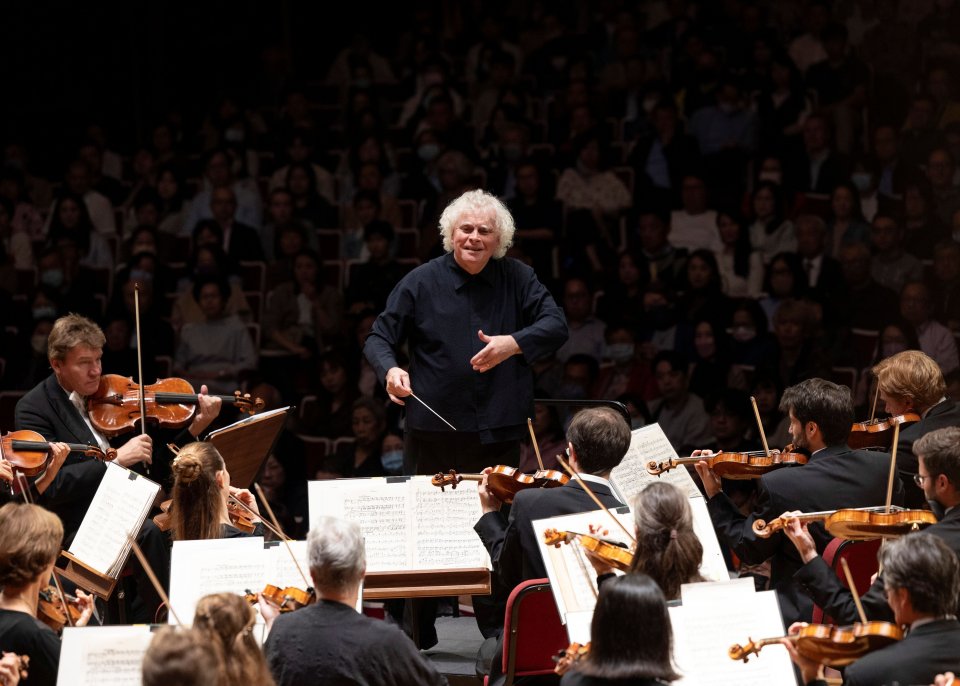
The Bavarian Radio Symphony Orchestra became an internationally recognised symphonic ensemble shortly after its founding in 1949. Its broad repertoire, which spans an arc from the Classical symphonies to contemporary music, is attributable to the huge flexibility of its players and the notable figures who shaped the orchestra during their tenure as Chief Conductor. After Eugen Jochum came Rafael Kubelík, Sir Colin Davis, Lorin Maazel and Mariss Jansons. The BRSO was also the only German orchestra led by Leonard Bernstein on a regular basis. Rafael Kubelík had a decisive influence on Simon Rattle in the latter’s early days. When the orchestra travelled to England and appeared in concert under Kubelík in 1970, young Simon was sitting in the audience. “Attending this concert changed my life,” Rattle recalled later, by that time a world-famous conductor. “Already a Kubelík fan, I was aware of the BRSO through many recordings I had bought. But the orchestra’s visit to Liverpool made a profound impression on a teenager who wished to be a conductor – to experience such a symbiotic relationship between conductor and players, and the unanimity of concept and philosophy was as evident as the sheer pleasure the musicians emanated. This concert became a kind of benchmark for me, a goal towards which musicians should strive.”