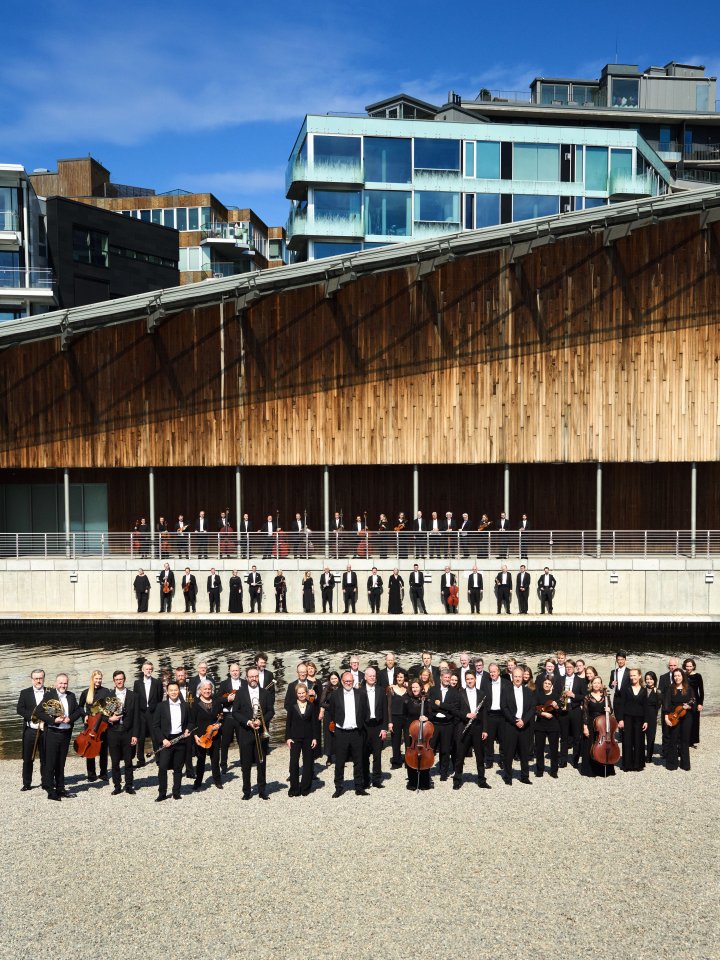


Mørk & Mäkelä & Oslo Philharmonic
Dvořák’s Cello Concerto performed by Truls Mørk and Sibelius’s Lemminkäinen suite, conducted by “Finnish miracle”, Klaus Mäkelä
Programme
- Antonín Dvořák: Concerto for Cello and Orchestra in B minor Op. 104
- Jean Sibelius: Lemminkäinen op. 22
Performers
- Oslo Philharmonic
- Klaus Mäkelä – conductor
- Truls Mørk – violoncello
When conductor Klaus Mäkelä made his Czech debut at the Prague Spring in 2023, he caused a sensation. The “Finnish miracle”, as the Czech daily Lidové noviny described him at the time, who assumes the posts of Music Director of the Chicago Symphony Orchestra and Chief Conductor of the Royal Concertgebouw Orchestra in 2027, now returns to the festival with the Oslo Philharmonic, which he has headed since 2020. And he brings with him an exquisite programme of Czech and Finnish music: Dvořák’s Cello Concerto in B minor with soloist Truls Mørk, who received the prestigious ECHO Klassik award for his recording of this piece, and the Lemminkäinen suite by Jean Sibelius (1865–1957), inspired by the Finnish epic Kalevala. It will be fascinating to hear this dramatic work performed by the Scandinavian musicians who made an acclaimed recording of all of Sibelius’s symphonies for Decca. “Mäkelä’s cycle is all of a piece, accomplished, insightful and full of the beauty and intrigue that make these works so perennially exciting,” stated a critic for Gramophone magazine. The work, which traces the adventures of the Finnish shaman Lemminkäinen, gives Mäkelä and the Philharmonic players the opportunity to acquaint us with a world of hitherto unfamiliar colours and emotions.
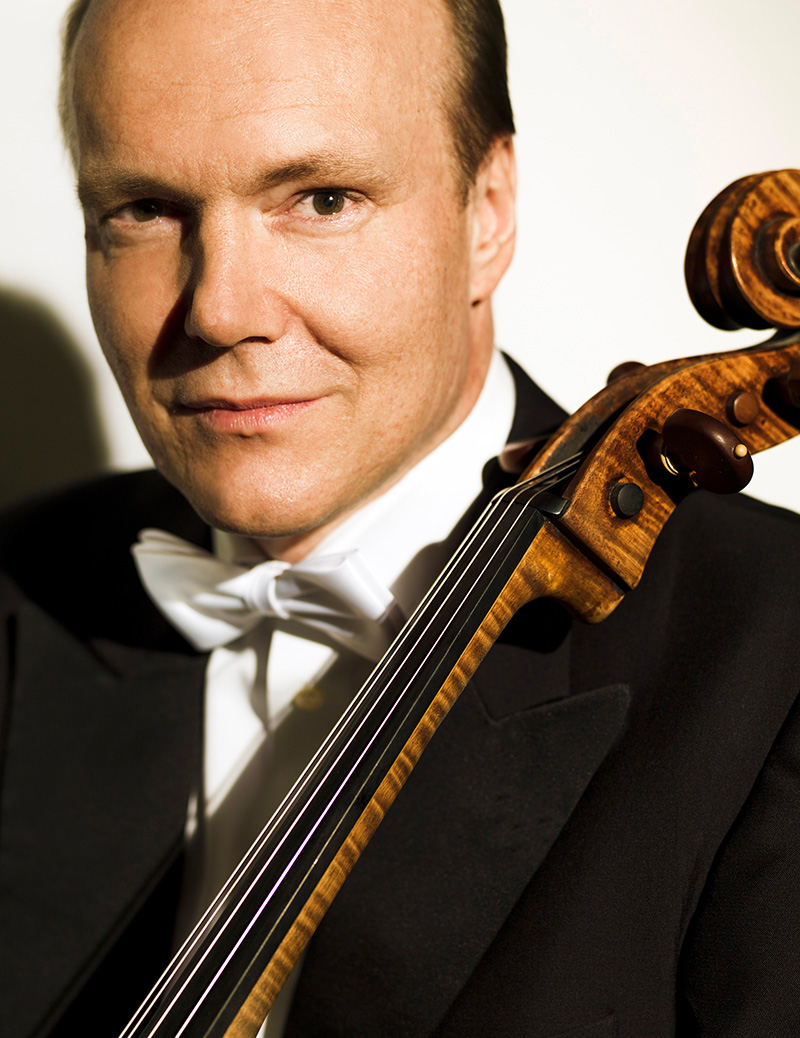
Klaus Mäkelä is a phenomenon currently without parallel. The pupil of celebrated Finnish teacher Jorma Panula literally hypnotises audiences all over the world with the sovereignty of his craft, with his energy, and his sense of the integral construction of large symphonic works; he is particularly known for his ability to win the hearts of not only the listeners, but also the orchestral players. Under his supervision the musicians are like changed individuals, a fact reflected in a recent review in the daily Chicago Tribune: “After a sleepy couple of months at Orchestra Hall, hearing the CSO give their all under Mäkelä was like a blast of fresh alpine air.” It’s wonderful that Mäkelä – himself still an active cellist – chose for the first part of his Prague Spring programme Cello Concerto in B minor by Antonín Dvořák (1841–1904). The piece, into which Dvořák projected reminiscences of his great love Josefína Kounicová, will be performed by excellent Norwegian cellist Truls Mørk, who justifiably enjoys his status as one of the most respected instrumentalists on the classical scene today. Over the course of his dazzling solo career he has worked with some of the world’s finest orchestras, including the Berlin, Vienna and New York Philharmonics, and the Boston Symphony Orchestra. “Mørk enthralled the audience from the first to last note. By turns tender, introverted, fiery and passionate, he constantly propelled us forward,” enthused Joanne Talbot in the British magazine The Strad. His recordings, released by Deutsche Grammophon, EMI and Virgin Classics, have won a series of prestigious awards, including a Grammy, a Gramophone Award and three ECHO Klassik awards.
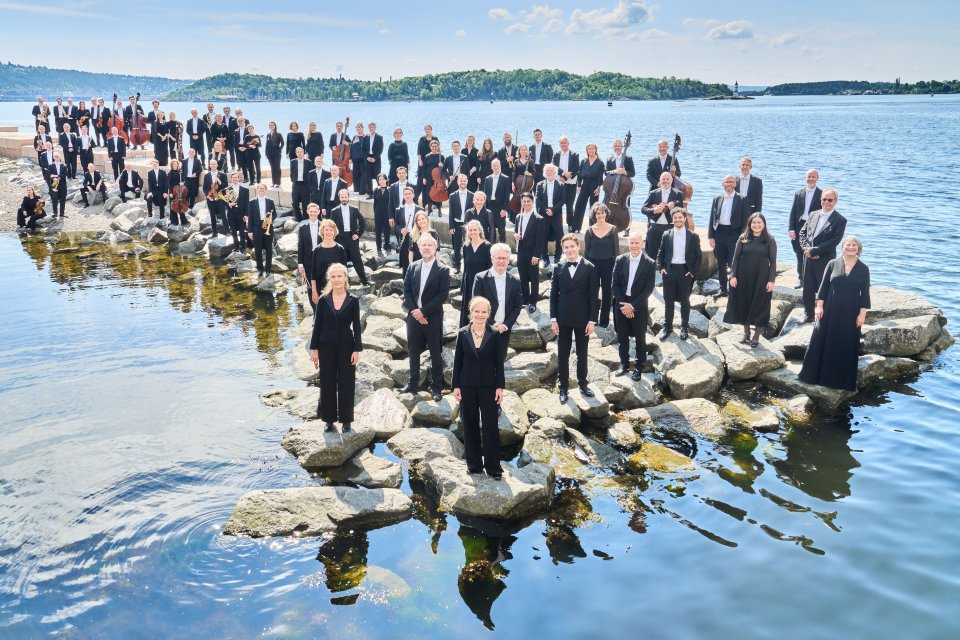
The first few years of the Oslo Philharmonic’s existence were already proving that, in 1919, another first-rate orchestra had emerged onto Scandinavia’s classical music stage. In its early days the ensemble was shaped by Chief Conductors Johan Halvorsen, Georg Schnéevoigt and Ignaz Neumark, and it was also led by a number of illustrious guest conductors: Arthur Nikisch and Jean Sibelius in the 1920s, or Igor Stravinsky in the 1930s. The concert with Wilhelm Furtwängler on 1 April 1940 was also momentous, occurring only eight days before the Nazi invasion of Norway. Since the 1960s the position of Chief Conductor has been undertaken by conducting legends such as Herbert Blomstedt, Mariss Jansons, Jukka-Pekka Saraste and Vasily Petrenko. Under Mäkelä the orchestra is experiencing a golden era. Last season they appeared at the Salzburg Festival while, this year, they have concerts in the Elbphilharmonie, the Philharmonie de Paris and Vienna’s Konzerthaus. Their appearance at the BBC Proms in 2022 with pianist Yuja Wang earned a full five stars from critics at both The Guardian and The Times. “We’re thrilled to return to Prague, for the first time in 24 years, with a programme that connects two cornerstones of the Oslo Philharmonic’s repertoire,” says the orchestra’s Head of Artistic Planning and Strategy, Alex Taylor. He continues: “Sibelius’ music has been a major focus of the journey with our extraordinary Chief Conductor, Klaus Mäkelä. Our recording together of the complete symphonies for Decca, released in 2022, received outstanding international reviews – and the Lemminkäinen suite has since become a signature work. We’ve performed it with Klaus several times at home in Oslo and on tour, and each time it feels like a rediscovery of these magical soundscapes. The four symphonic poems that make up the suite are based on stories from the Finnish national epic, the Kalevala. They take the listener deep into Nordic legend and showcase the orchestra’s deep, rich sound.” Taylor goes on to say, “it’s also wonderful to perform again with our dear friend and longtime collaborator Truls Mørk. His special connection with Dvořák’s Cello Concerto is well documented, and his performances are always full of soul and nuance. Our 1993 recording of the concerto with Truls and then Chief Conductor Mariss Jansons remains a benchmark interpretation – and it’s a privilege to revisit this beloved work together for the audience in Prague.” Brahms was likewise very taken with the concerto, prompting him to remark: “If I had known that it was possible to write a cello concerto like this, I would have tried it as well!” In short, the evening with the Oslo Philharmonic will offer the best of the Romantic repertoire from the end of the 19th century, and this in a truly superb interpretation.