


Barbara Hannigan – La Voix humaine
Barbara Hannigan as singer and conductor of the Czech Philharmonic in the Czech premiere of her own fabled adaptation of Francis Poulenc’s opera La Voix humaine, featuring a live video screening.
Programme
- Richard Strauss: Metamorphosen for 23 solo strings
- Francis Poulenc: La Voix humaine, one-act opera for soprano and orchestra
Performers
- Czech Philharmonic
- Barbara Hannigan – soprano, conductor
Artist-in-Residence of the Prague Spring 2026 Barbara Hannigan is one of the most original figures in the sphere of classical music. With her typical courage and determination she sings and also conducts, she inspires the finest contemporary composers in their endeavours, and she creates unique projects which go far beyond the customary concert experience. Born in Canada, she has performed the premieres of more than one hundred works. She collaborates with some of the world’s most distinguished conductors and orchestras, including the Berlin Philharmonic. She is Principal Guest Conductor of the Gothenburg Symphony Orchestra, she holds the positions of Associate Artist of the London Symphony Orchestra and the Première Artiste Invitée of the Orchestre Philharmonique de Radio France, and in the autumn of 2026 she will take up her post as Chief Conductor and Artistic Director of the Iceland Symphony Orchestra. Her exceptional artistic achievements are moreover reflected in a number of prestigious awards, among them a Grammy Award, the title Artist of the Year from Gramophone magazine, and the Polar Music Prize 2025, a Swedish international award established by music publisher and manager of ABBA Stig Anderson, which she won together with jazzman Herbie Hancock and the rock band Queen. Her Prague Spring residency will consist of four concerts.
We will fully appreciate the artist’s unique talent in the third concert of her festival residency, where she will appear not only as a singer and actress, but also as the conductor of the Czech Philharmonic. “This will be the Czech premiere of my production of Poulenc’s opera La Voix humaine, which involves live video by means of three cameras placed within the orchestra, and a large screen behind the players. The opera, with texts by Jean Cocteau, seems to be the final conversation between a woman and her (ex)lover. But the text constantly returns to the importance the woman places on fantasy, imagination, truth and lies. It becomes clear that this character needs to live in her own version of reality (as do we all…) and her isolation and emotional intensity brings the opera to a heartbreaking finish. I have paired Poulenc’s opera with Metamorphosen by Richard Strauss (1864–1949), in which we see the emotional landscape as the Second World War was coming to its end,” Barbara Hannigan tells us. Metamorphosen for 23 solo strings, completed on 12 April 1945, is a late, immensely personal work by the then 81-year-old composer, sometimes described as Strauss’s epitaph of a German culture destroyed by war. The piece, most likely inspired by Goethe’s poem Niemand wird sich selber kennen (No-one will ever know himself), ends with a quotation of Marcia funebre from Beethoven’s Eroica Symphony, beneath which, on the final page of his autograph, Strauss wrote the words “In memoriam!”
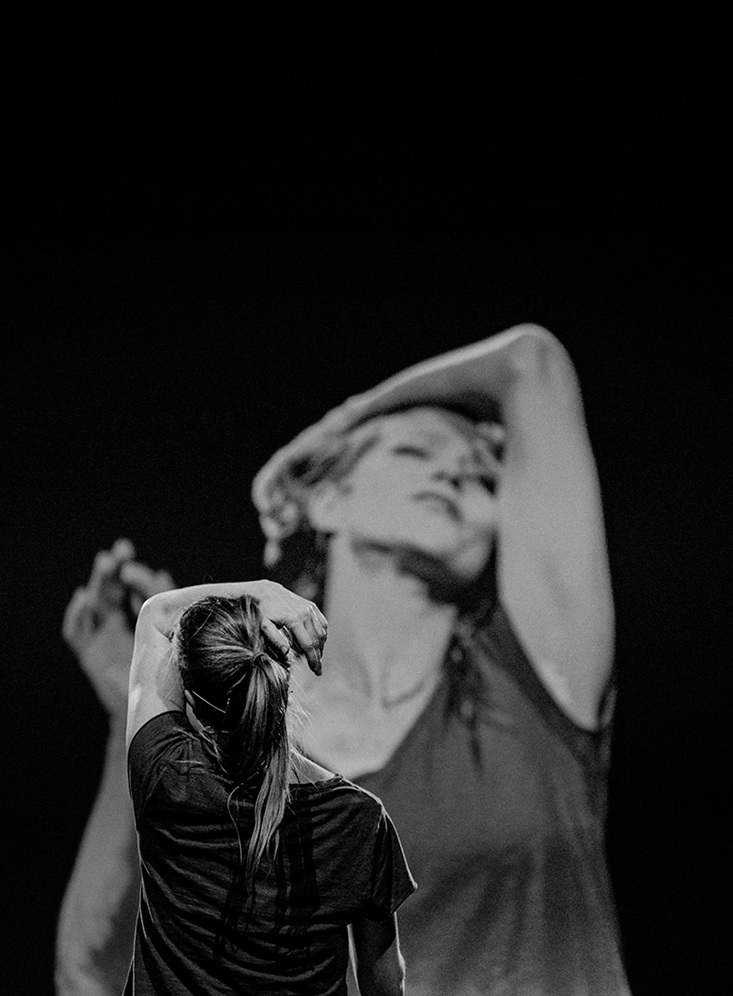
Speaking into the mouthpiece, Elle says “I love you…” four times, delivering her mantra to her lover, who is leaving her forever. This is the end of the one-act opera La Voix humaine (The Human Voice) written by Francis Poulenc (1899–1963) and based on the play of the same name by Jean Cocteau. Cocteau wrote his monodrama in 1928, shortly before being accepted for treatment for his opium addiction; yet it was thirty years – 1958 – before its musical setting saw the light of day. From his own experience Poulenc knew all about the fear, depression and nervous exhaustion that the loss of a loved one can induce. It wasn’t long before the composition of La Voix humaine that he had experienced something similar. “I’m writing an opera,” he told a friend; “you know what it’s about: a woman (me) is making a last telephone call to her lover who is getting married the next day.” He incorporated the role of the unseen and unheard ex-lover into the part played by the orchestra, which mediates what is happening on the other end of the phone. “This one-sided conversation is absolutely full of contradictions, lies, fantasy and desire. What I am most interested in is the power, control, weakness and the ever-changing equilibrium of all of these aspects of Elle. I find myself asking if there even is an ex-lover. What and who really exists within these deep and true emotions of love, loss and loneliness?” wonders Barbara Hannigan, commenting on this fascinating work. Not only will she be performing the only role in this opera, but she will also be conducting the work. “Her physical commitment is total. She plays, lives and inhabits the music as much as her role,” wrote the French magazine Télérama of her singular interpretation of Elle. “Her body and face are remarkably adaptable and expressive. The pirouettes, pranks and emotions follow one another with fluidity. The high points of the work are overwhelming.” Cocteau’s monologue inspired a number of other creations, including the famous film by Pedro Almodóvar Women on the Verge of a Nervous Breakdown. Soon after its premiere in Paris, Poulenc’s opera conquered Milan’s La Scala and other world venues and today is a rare gem of the 20th century operatic repertoire.
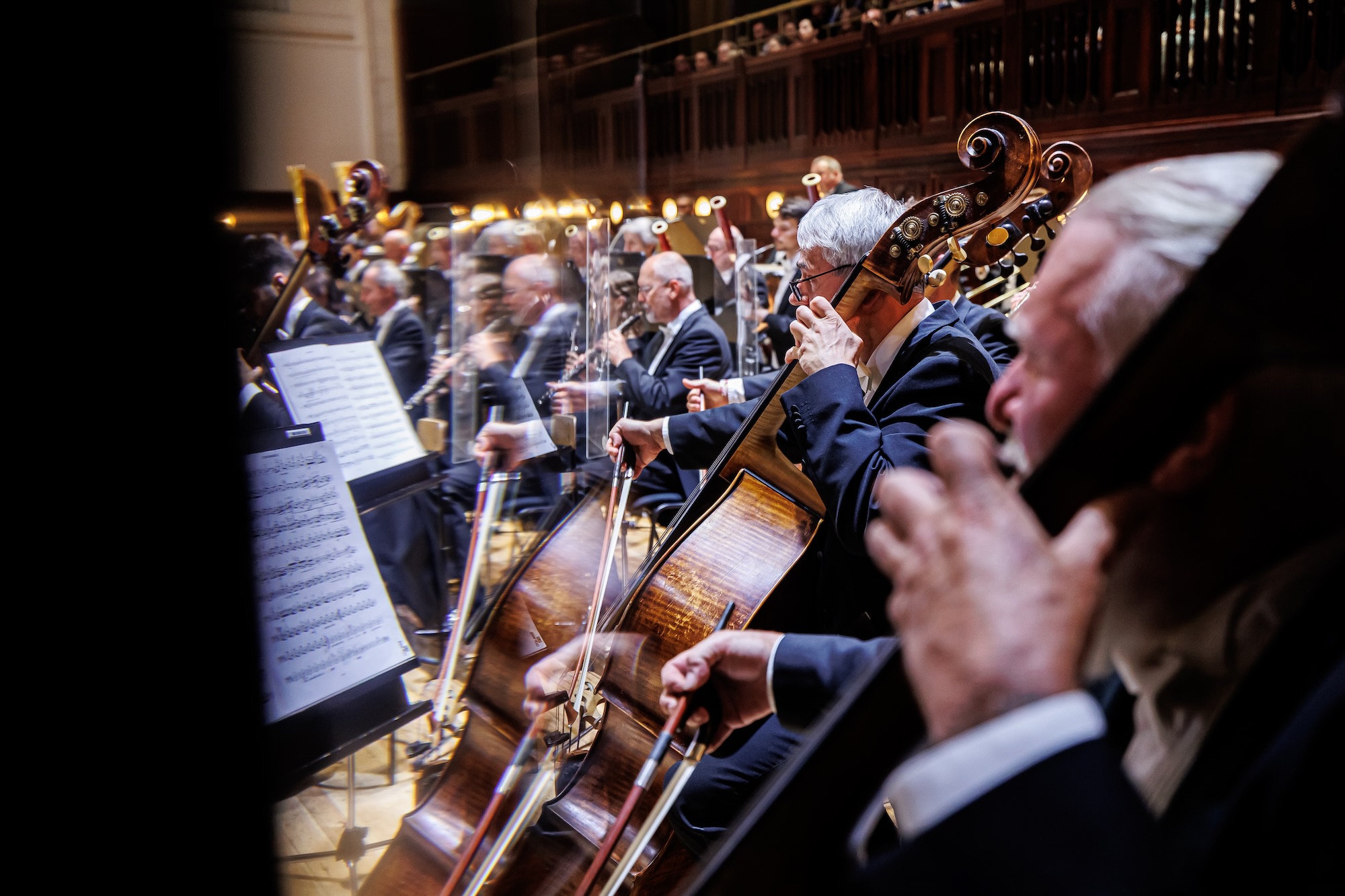
Strauss´ Metamorphosen with Berliner Philharmoniker and Herbert von Karajan