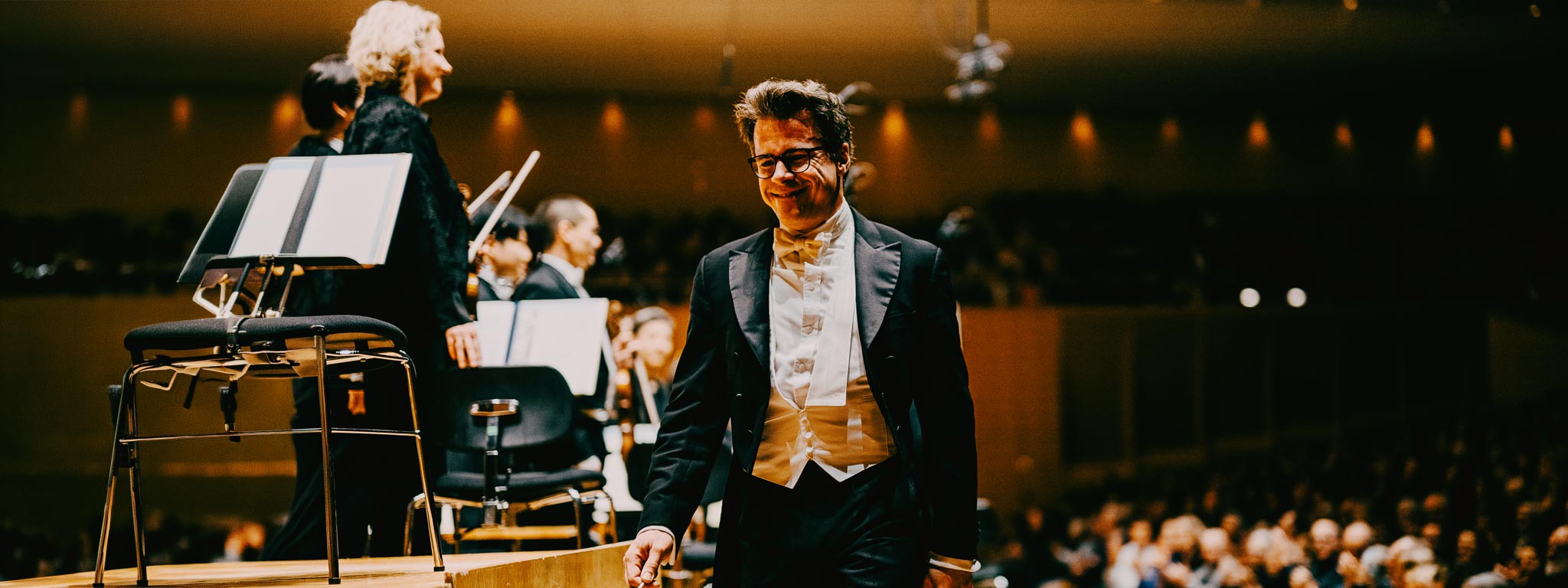
Hrůša & Bamberger Symphoniker: Beethoven 8 & 9
Discover Ludwig van Beethoven through performances of his complete symphonies and get a Beethoven pass offering a range of experiences. We’ll bid farewell to the ticking metronome in Symphony No. 8 and to the Ninth with the Ode to Joy!
Programme
- Ludwig van Beethoven: Symphony No. 8 F major op. 93
- Ludwig van Beethoven: Symphony No. 9 in D minor Op. 125
Performers
- Bamberger Symphoniker
- Jakub Hrůša – conductor
- Czech Philharmonic Choir Brno
- Petr Fiala – choirmaster
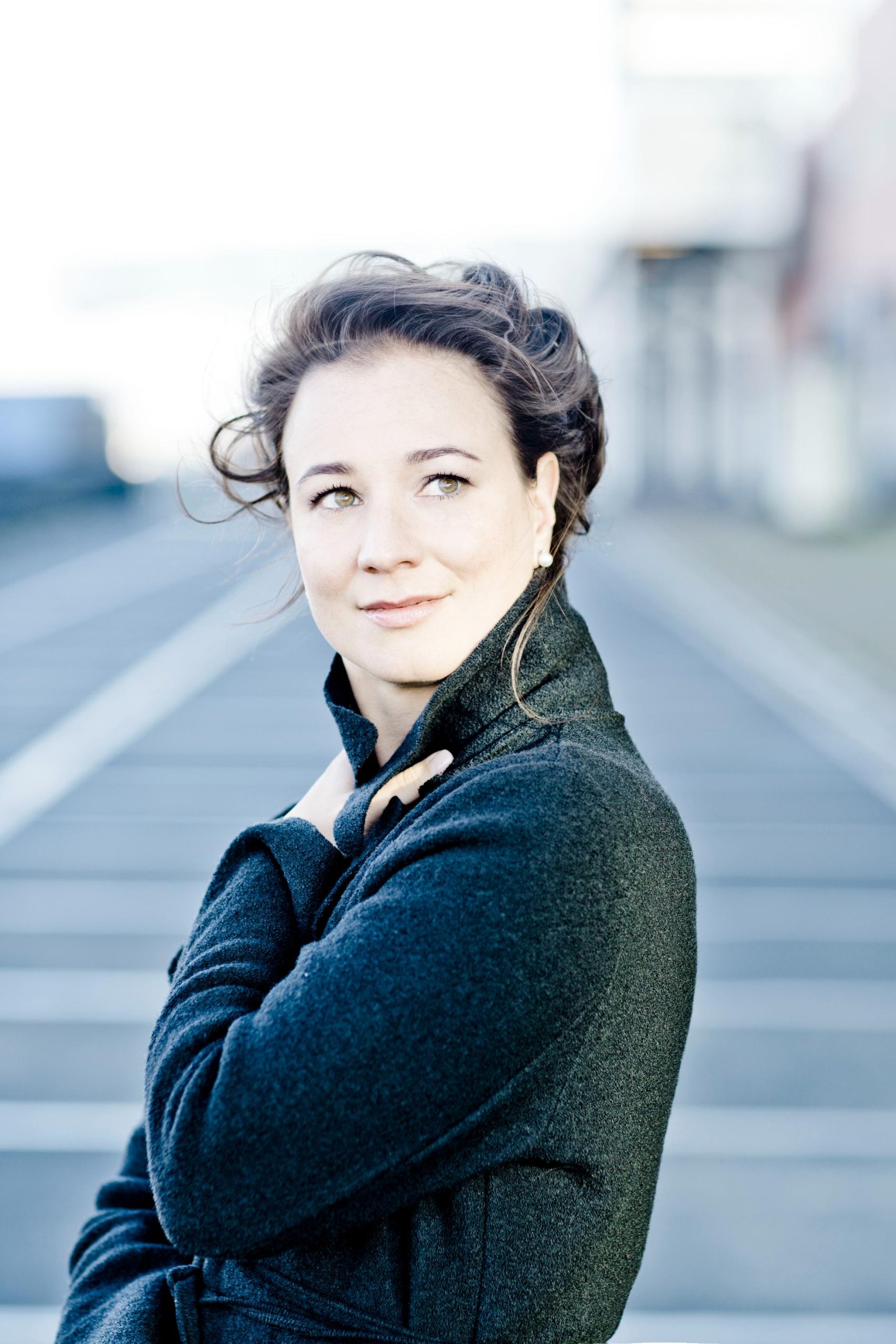
- Christina Landshamer – soprano
- Jingwen Cai – alto
- Thomas Atkins – tenor
- Nicholas Brownlee – bass-baritone
#MeetBeethovenLive
1814 | Symphony No. 8
I am very fond of the Eighth. The shortest symphony I ever wrote! I began sketching it in April 1812 – yes, the year of Napoleon’s disastrous invasion of Russia. Wearied by the scandal involving my sister-in-law Johanna, financial problems caused by the collapse of the Austrian currency, and my deteriorating health, I left for Teplitz in the summer months of 1812. I also visited Karlsbad and Franzensbad where, in idyllic surroundings, I completed the score of my Eighth. The second movement supposedly “ticks” like a metronome, an instrument invented by my former friend Johann Maelzel. Even in this I was something of a visionary: The metronome only saw the light of day in 1816. After the Eighth, my symphonic writing ceased for a number of years; the world had to wait a little while longer for the Ninth.
1824 | Symphony No. 9
After a twenty-year struggle with a painful, demeaning illness I found myself on the brink of insanity. I suffered through every note of the Ninth. In the Ode to Joy alone I rejected more than two hundred different versions of the introductory motif.
But to add a choir to a symphony – you must admit that it was not a bad idea at all! I conducted the premiere in Vienna on the 7th of May, 1824. Yes, I know what you want to say. “It was Umlauf who conducted the piece, not you, because you were completely deaf by then!” And you would be right. At the end of the performance they had to turn me around so that I could at least see the thunderous applause from the auditorium. Yet, in my head, I had heard every single note.
Interesting facts about Beethoven’s Ninth
- In 2026 readers of BBC Music Magazine voted the Ninth as the second greatest symphony of all time (the greatest being Beethoven’s Eroica).
- The capacity of a CD was apparently set at 74 minutes so that it could hold a complete recording of Beethoven’s Ninth.
- A historic performance of the Ninth was conducted by Leonard Bernstein in Berlin in 1989 at the first concert after the fall of the Berlin Wall. On this occasion Bernstein, in the Ode to Joy, replaced the word “Freude” (joy) with “Freiheit” (freedom).
- The film world was also fond of the Ninth. The second movement with its brisk waltz rhythm accompanies scenes in Stanley Kubrick’s adaptation of the psychological thriller A Clockwork Orange. And the Ode to Joy sets the tone in the triumphal football scene in Peter Weir’s famous film Dead Poets Society.
- In 1985 the Ode to Joy was chosen as the official anthem of the European Union.
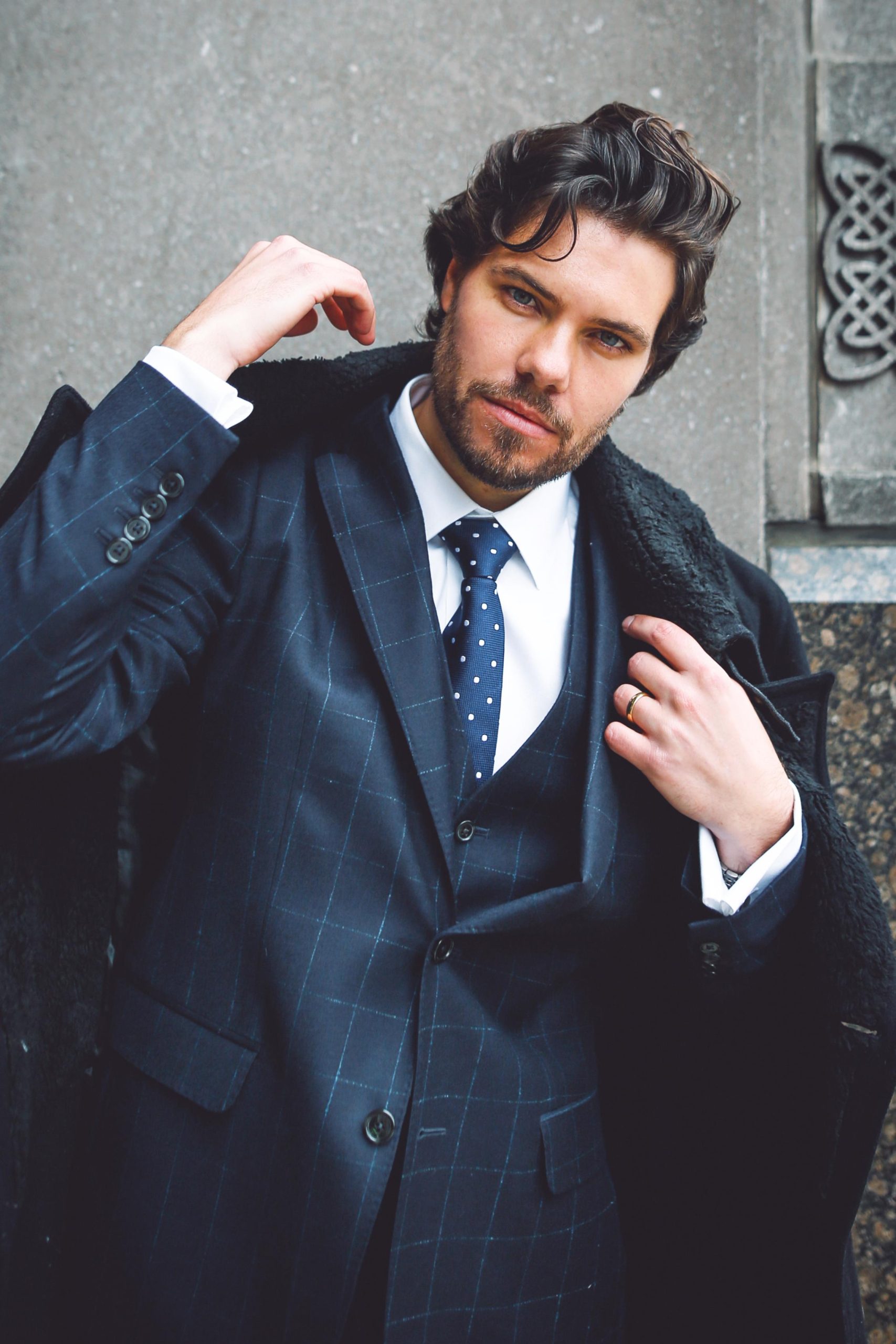
The 200th anniversary of the death of Ludwig van Beethoven (1770–1827) provides the Prague Spring with an opportunity to commemorate the wonderful oeuvre of this native of Bonn. The festival projects for 2027 are dominated by performances of the complete Beethoven symphonies by the Bamberg Symphony and conductor Jakub Hrůša who, with this project, rounds off his tenth season at the helm of this first-class orchestra. “Each of the nine symphonies opens a new musical world and expands the possibilities of the symphonic form. This is the central idea behind our programme: to make audible the arc of a lifelong artistic journey. Within a single concert – and even more so across the complete cycle – we can experience Beethoven’s extraordinary creative development and the constant reinvention of his musical language. We encounter not only the composer of heroic struggle, but also one of the greatest lyrical voices in symphonic music: a composer of tenderness, truthfulness and immense vitality, who embraced every aspect of life. For both musicians and audiences, it is an overwhelming experience to follow this journey together and discover the richness, contrasts and originality of each symphony,” Jakub Hrůša tells us.

Bamberg Symphony – Prague Spring 2027 Resident Orchestra
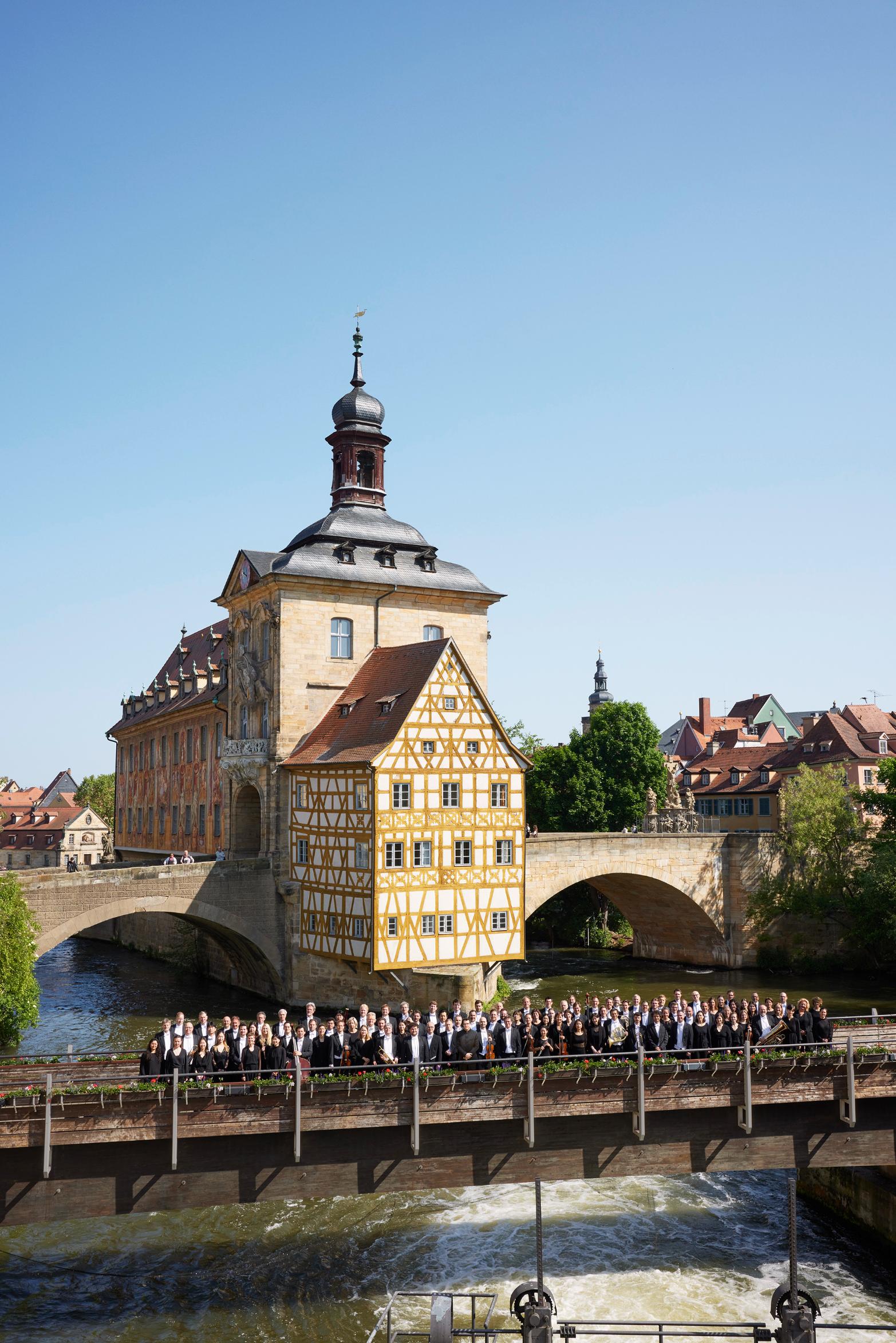
It is the 20th of March, 1946, shortly after eight o’clock in the evening. A tense silence prevails in Bamberg’s Zentralsaal as the newly founded ensemble plays the first few notes. Beethoven is on the programme. The Bamberg Symphony enters the concert arena through the music of arguably the greatest symphonist in history, and it is in his oeuvre that the orchestra finds its deep artistic roots…
Based in the picturesque Bavarian town of Bamberg, a UNESCO World Heritage Site, the orchestra has given 8,000 concerts in more than 500 cities in 64 countries and is thus one of the most frequently travelled symphonic ensembles in the world. They briefly define their mission as “resonating worldwide”. Their numerous recordings, released on such prestigious labels as Deutsche Grammophon and accentus music, have won a series of international awards, among them the German Record Critics’ Award 2021 and three International Classical Music Awards (2022, 2023 and 2025). The ensemble’s in-depth study of Beethoven’s music continually draws on the orchestra’s entire eighty-year history, supported by the endeavours of Joseph Keilberth, Sir Georg Solti, Eugen Jochum and Honorary Conductor of the Bamberg Symphony Herbert Blomstedt. Today this legacy is further developed in close collaboration with Chief Conductor Jakub Hrůša. Under his direction Beethoven’s cycle represents not only a tribute to this great composer, but also a return to the orchestra’s own history. Beethoven is and remains the foundation of the Bamberg Symphony’s musical identity.
Other concerts as part of the Bamberger Symphoniker’s orchestra residency
Hrůša & Bamberger Symphoniker: Beethoven 1, 2 & 3
Discover Ludwig van Beethoven through performances of his complete symphonies and get a Beethoven pass offering a range of experiences. The first evening will feature Symphonies Nos. 1 and 2, and the most popular symphony of all time, the Eroica!
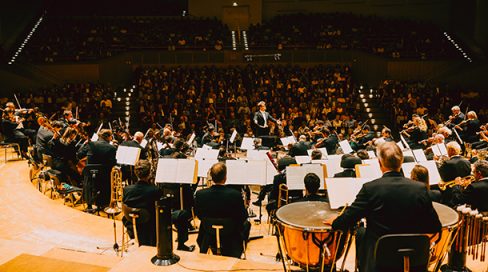
Hrůša & Bamberger Symphoniker: Beethoven 4 & 5
Discover Ludwig van Beethoven through performances of the complete symphonies and get a Beethoven pass featuring a range of experiences. On the second evening, Fate will be performed, paired with the charming Symphony No. 4.
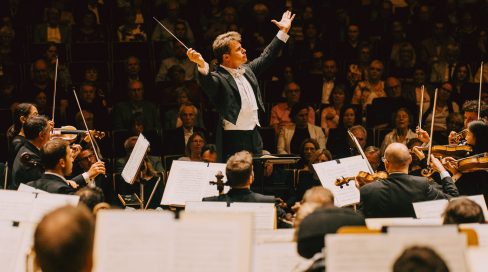
Hrůša & Bamberger Symphoniker: Beethoven 6 & 7
Discover Ludwig van Beethoven through performances of his complete symphonies and get a Beethoven pass offering a range of experiences. On the third evening, you’ll be enchanted by the natural scenery of the Pastoral and the radiant Apotheosis of Dance with its immortal Allegretto!