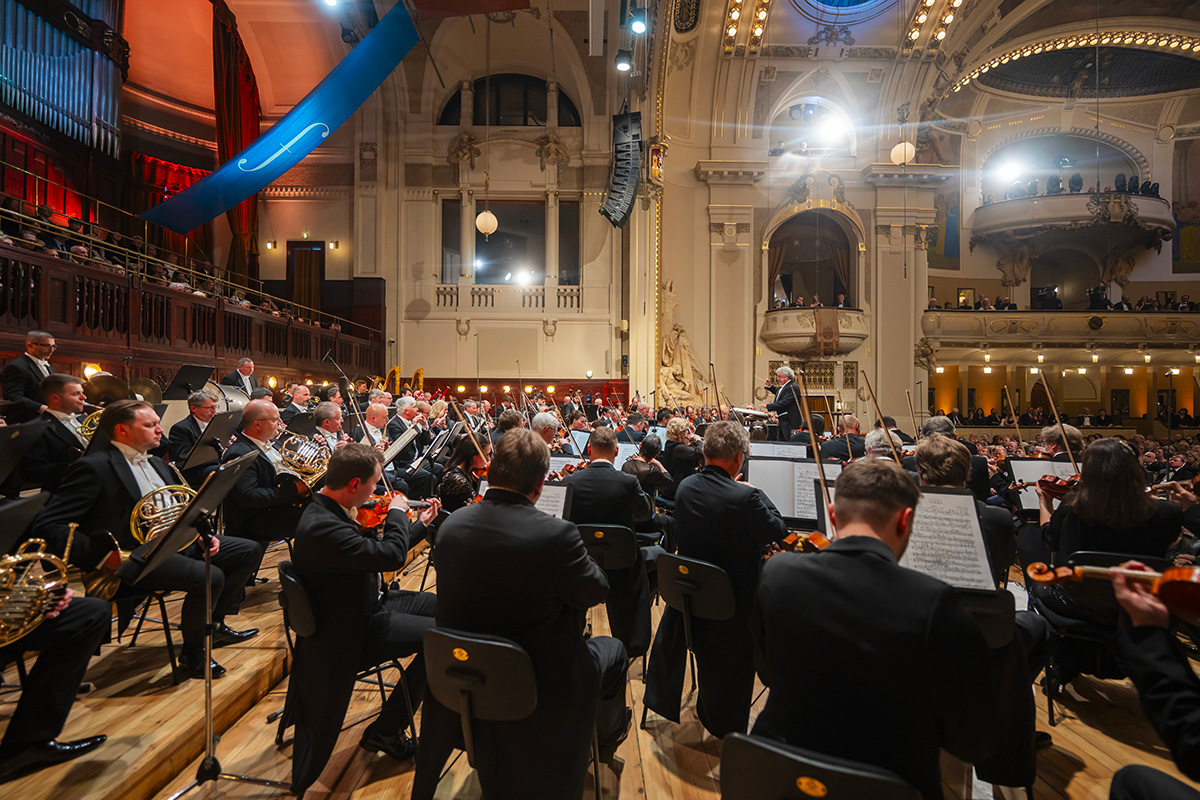

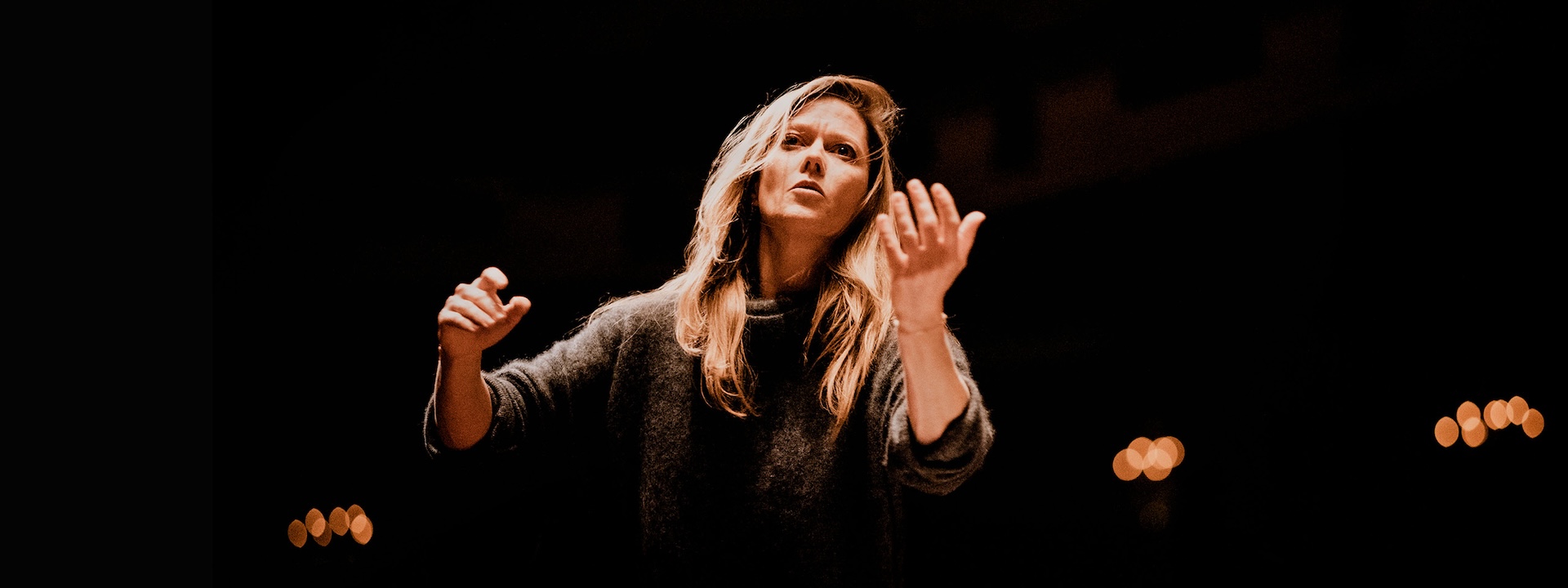
Barbara Hannigan & Czech Philharmonic
What links George Gershwin, one of the greatest hitmakers of the 20th century, with Arnold Schoenberg? Barbara Hannigan and the Czech Philharmonic’s Crazy Ride in a programme full of contrasts and surprises.
Programme
- Charles Ives: The Unanswered Question
- Joseph Haydn: Symphony No. 45 in F sharp minor “Farewell” Hob. I:45
- Arnold Schönberg: Transfigured Night Op. 4
- George Gershwin: Girl Crazy, suite from the musical (arr. Bill Elliott & Barbara Hannigan)
Performers
- Czech Philharmonic
- Barbara Hannigan – soprano, conductor
Pre-Concert Talk with Barbara Hannigan at 6.45 pm (in English)
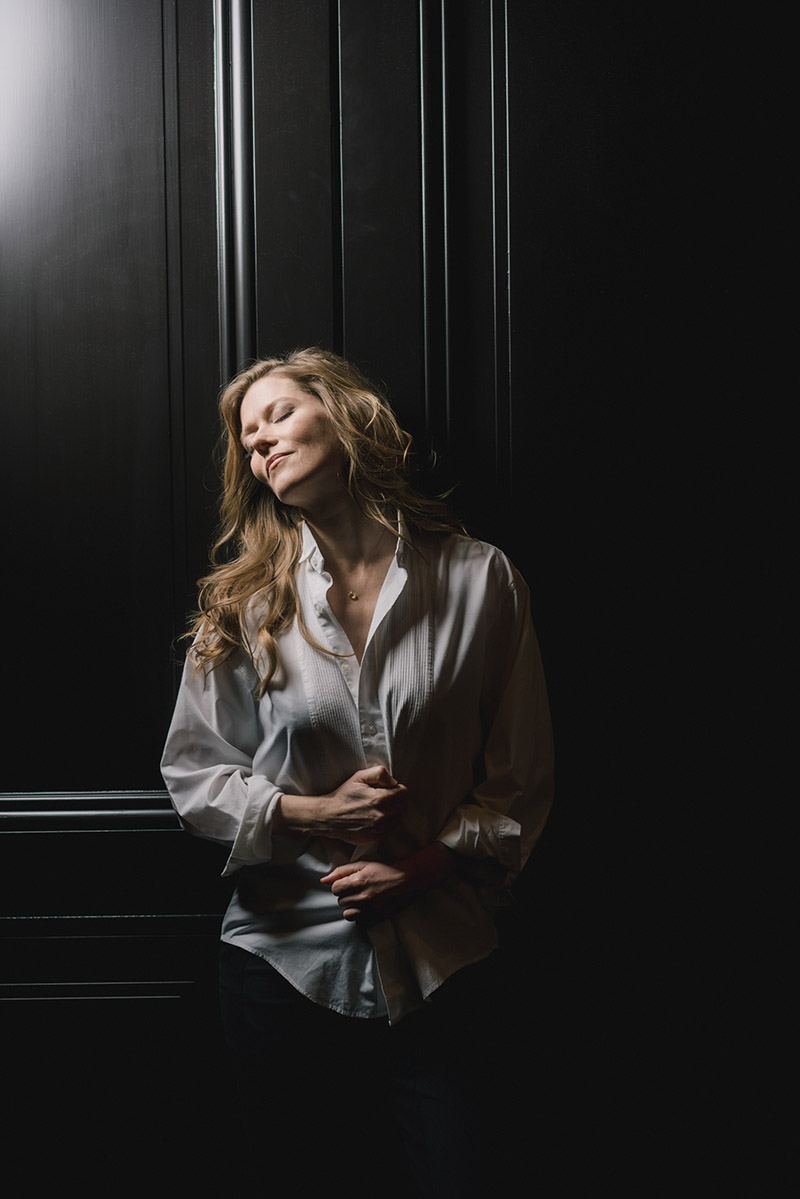
Artist-in-Residence of the Prague Spring 2026 Barbara Hannigan is one of the most original figures in the sphere of classical music. With her typical courage and determination she sings and also conducts, she inspires the finest contemporary composers in their endeavours, and she creates unique projects which go far beyond the customary concert experience. Born in Canada, she has performed the premieres of more than one hundred works. She collaborates with some of the world’s most distinguished conductors and orchestras, including the Berlin Philharmonic. She is Principal Guest Conductor of the Gothenburg Symphony Orchestra, she holds the positions of Associate Artist of the London Symphony Orchestra and the Première Artiste Invitée of the Orchestre Philharmonique de Radio France, and in the autumn of 2026 she will take up her post as Chief Conductor and Artistic Director of the Iceland Symphony Orchestra. Her exceptional artistic achievements are moreover reflected in a number of prestigious awards, among them a Grammy Award, the title Artist of the Year from Gramophone magazine, and the Polar Music Prize 2025, a Swedish international award established by music publisher and manager of ABBA Stig Anderson, which she won together with jazzman Herbie Hancock and the rock band Queen. Her Prague Spring residency will consist of four concerts.
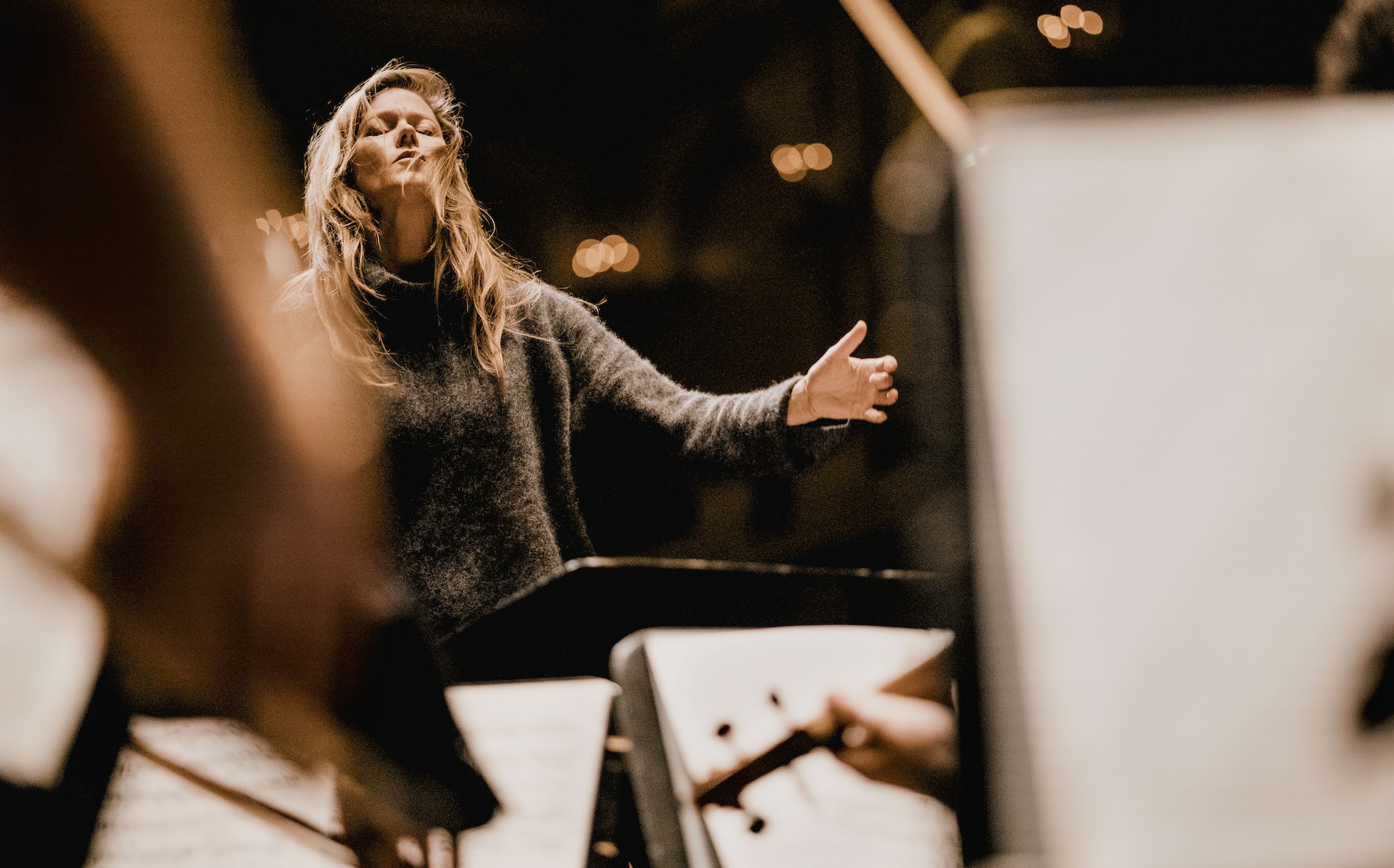
“My second Prague Spring concert with the Czech Philharmonic features works very dear to me: Haydn’s Farewell Symphony with its tender finish, and in the second half we have another tone poem for strings, Schoenberg’s early work Verklärte Nacht (Transfigured Night), in which a woman makes a heartbreaking confession to the love of her life. We follow this with Gershwin’s Girl Crazy Suite, which one might feel is a strange pairing (and, indeed, the reality that the two composers were friends and even tennis partners does seem absurd to some) but here we have two great composers dealing with rich harmony and the emotions of romantic love,” states Barbara Hannigan. In any case, as her residency draws to a close the artist invites us on an adventure, which she will open with the now legendary piece entitled The Unanswered Question by American musical visionary Charles Ives (1874–1954). The founder of the Ives & Myrick Insurance Company, he was the first to devise ways of structuring life-insurance packages that laid the foundations for modern estate planning. He only composed at weekends and on the train to work; although his music was decades ahead of its time, his work as a composer was largely ignored during his lifetime. To illustrate this point, we might mention the fact that, in 1947, he won the Pulitzer Prize for his Third Symphony, a work he had written forty years earlier. The Unanswered Question, a mystical work from the year 1908, is sometimes described as programme music, yet it would be more fitting to speak of philosophy transferred to music. In the introduction to the piece the composer writes that he is exploring “The Perennial Question of Existence”. Barely six minutes long, the work is discernibly structured into three independent layers: the first is created by the solo trumpet, the second by four flutes, and the third by the strings, which form some kind of serene background. The trumpet solo poses the question, while the four flutes, representing humanity, try to find an answer – at first softly, but later – as if frustrated that it cannot be found – growing increasingly more aggressive and agitated. Finally the trumpet asks the question one last time… And the response is an eloquent silence.
The next piece on the programme – Symphony No. 45 “Farewell” by Joseph Haydn (1732–1809) also has a hidden subtext. Haydn wrote it at the summer residence of his patron, Nikolaus I, Prince Esterházy, who had stayed at the palace longer than expected, together with all his orchestral musicians and retinue. Unhappy that they could not return to their families, the musicians looked to their Kapellmeister for help, and the composer, instead of making a direct appeal to the prince, put his request into the music of the symphony: during the final movement each musician gradually stopped playing, extinguished the candle on his music stand and left the room, until only the concertmaster and Haydn himself remained on the podium. Esterházy apparently understood the message and his entire court, including the musicians, returned to Vienna shortly after the performance of the work. Today this symphony offers a wonderful and enjoyable opportunity for the orchestral players to demonstrate their acting skills as well.
What did the founder of the Second Viennese School and leading composer of atonal music Arnold Schoenberg (1874–1951) and George Gershwin (1898–1937), one of the greatest hitmakers of last century, have in common? More than it would seem. After Schoenberg found refuge in California, both composers began to meet up regularly and a mutual respect grew into a friendship cemented by their shared love of tennis and fine art. Gershwin even painted Schoenberg’s portrait. When the former suddenly died from a brain tumour shortly afterwards, Schoenberg paid a moving tribute to his friend during a radio broadcast. “George Gershwin was one of these rare kind of musicians to whom music is not a matter of more or less ability. Music, to him, was the air he breathed, the food which nourished him, the drink that refreshed him. Music was what made him feel and music was the feeling he expressed. Directness of this kind is given only to great men.” Barbara Hannigan decided to combine their oeuvre in the latter half of the concert. First we will hear the piece for strings Verklärte Nacht (Transfigured Night), Schoenberg’s lyrical work strongly influenced by Wagner’s Tristan und Isolde and inspired by the poem of the same name by Richard Dehmel from the collection Weib und Welt (Woman and World). The erotic, symbolist, decadent nature of Dehmel’s verse had a fundamental influence on Schoenberg’s work for a number of years. “It was this poetry that first enticed me to seek a new tone in lyricism,” he told Dehmel in one of his letters. The programme will culminate in a performance of the spectacular suite from the musical Girl Crazy, featuring Gershwin’s most famous songs I Got Rhythm and Embraceable You, which Barbara Hannigan will sing in her inimitable way at the close of her festival residency, in collaboration with the Czech Philharmonic. v