
Dvořák’s Romance
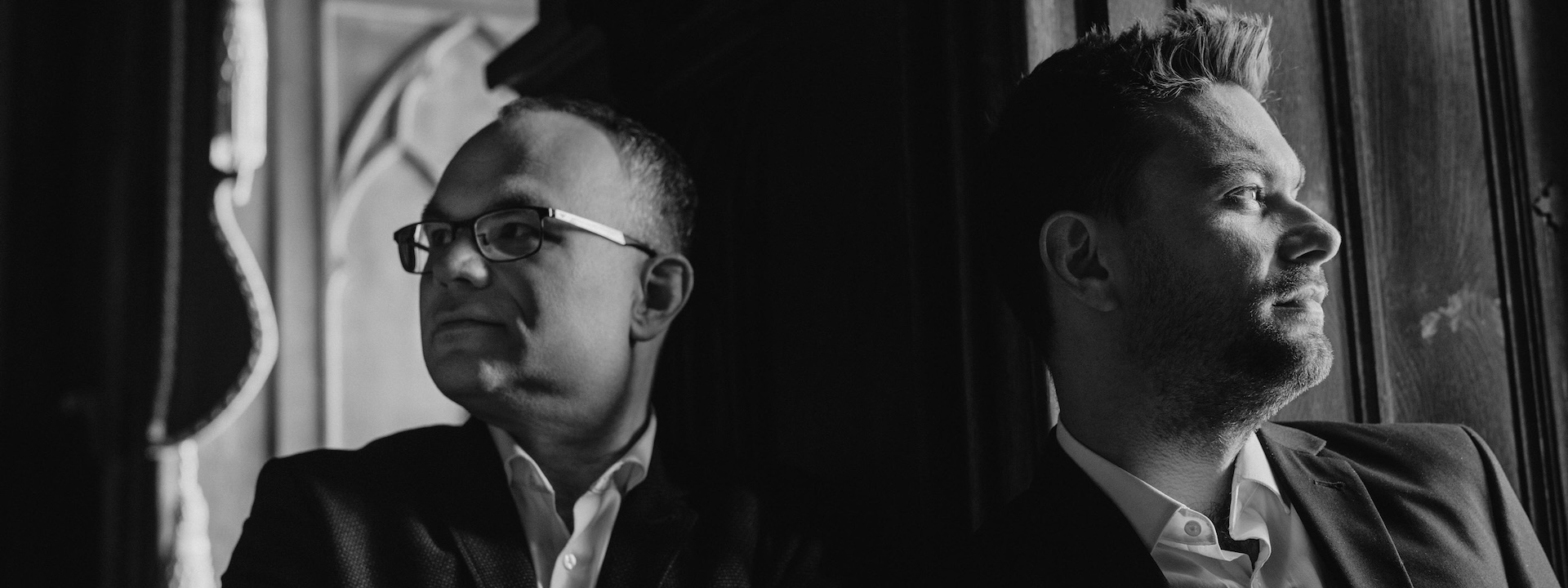
The lyrical world of compositions for violin and piano by Antonín Dvořák, whose exquisite music will come to life in the hands of Jiří Vodička, concertmaster of the Czech Philharmonic, and David Mareček.
Programme
- Antonín Dvořák: Romantic Pieces Op. 75
- Antonín Dvořák: Sonata for Violin and Piano in F major Op. 57
- Antonín Dvořák: Sonatina for Violin and Piano in G major, Op. 100
- Antonín Dvořák: Romance in F minor Op. 11
- Antonín Dvořák: Mazurek in E minor Op. 49
Performers
- Jiří Vodička – violin
- David Mareček – piano
“It adds up to almost one and three-quarter hours of incredibly stylistically varied music […] And so far as I can tell, this complete recording is the first to bring absolutely all of it together in one place, although their album’s greatest worth isn’t its comprehensiveness, but the playing itself,” wrote British magazine Gramophone, describing the album of complete works for violin and piano by Antonín Dvořák, released in 2024 on the Supraphon label by concertmaster of the Czech Philharmonic Jiří Vodička and pianist David Mareček. Pieces from this album, which earned the title Editor’s Choice from Gramophone, a Choc de Classica award and a five “tuning fork” rating from Diapason magazine, appear on the programme for the artists’ first joint recital at the Prague Spring. “Antonín Dvořák’s music has always been close to my heart,” states Jiří Vodička. “David Mareček and I endeavour to present his works not merely as exquisite pieces from the concert repertoire, but as part of an integral musical world – with its own dynamic, drama and gentle lyricism. To perform this programme at the Prague Spring is an honour for us and also a great pleasure. We are convinced that, together with the audience, we’ll experience a concert in which the beauty of Dvořák’s simple yet immensely strong musical language will come alive.” Five of the most wonderful chamber compositions that Dvořák ever wrote for violin and piano will resonate in style in the Rudolfinum’s Dvořák Hall.
The concert consists of works which were written gradually from the 1870s to Dvořák’s period in America in the years 1892–1895. We begin with the popular Romantic Pieces from 1887, four short pieces of diverse character, filled with passionate determination and gentle lyricism. This is followed by Sonata for Violin and Piano in F major, Dvořák’s only sonata that has survived to this day. It was written within a mere fifteen days in the spring of 1880 more or less concurrently with Concerto for Violin and Orchestra in A minor. The second half of the concert will open with the joyful Sonatina in G major, which Dvořák wrote in New York in late November and early December 1893. The composition bears the opus number 100 and Dvořák, conscious of the significance of this number, dedicated it to his children Otilie and Antonín, who performed the piece for the first time at a private premiere. Dvořák described the work in a letter to his publisher: “It is meant for young people, but also for adults, let them enjoy it, too, they’ll have fun playing it as well.” The main theme of the second movement supposedly came to the maestro as he observed the Minnehaha waterfall in the state of Minnesota. Later on this part was published independently under various poetic titles, such as Indian Lullaby and Indian Lament. The concert will end with what are possibly two of Dvořák’s most impressive compositions for solo violin: Romance in F minor and the virtuosic Mazurek in E minor. Both were written in the 1870s and both enjoy huge popularity to this day, in the version for violin and orchestra as well as with piano accompaniment. It is interesting to note that Mazurek was premiered by violinist Ferdinand Lachner with composer Zdeněk Fibich at the piano.
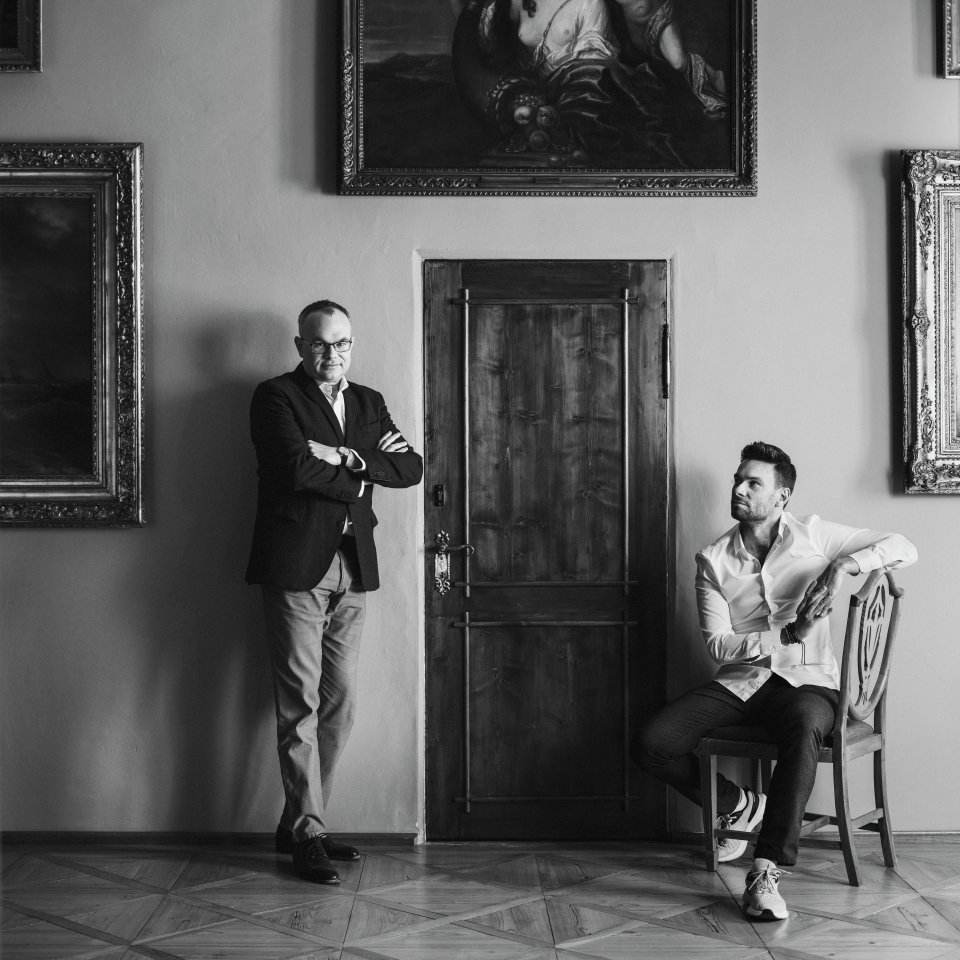
Jiří Vodička, concertmaster of the Czech Philharmonic, soloist and chamber musician, was already being recognised as a big talent during his childhood, winning a series of competitions, including the Kocian Violin Competition in Ústí nad Orlicí. In 2002 he won first prize in the Beethoven’s Hradec competition and, that same year, he won the award for best participant at the violin masterclass headed by Václav Hudeček, with whom he subsequently gave dozens of concerts all over the Czech Republic. Aged only fourteen he was accepted at Ostrava University’s Institute for Artistic Studies, from where he graduated in 2007 with a master’s degree. He was outright winner of the International Louis Spohr Competition in Weimar and laureate of the world round of the 2008 Young Concert Artists competition in New York. As a soloist he has appeared with the Czech Philharmonic, the Prague Radio Symphony Orchestra, the Prague Symphony Orchestra and the Barocco sempre giovane chamber ensemble. On the invitation of violinist Gidon Kremer he took part in the chamber music festival in Lockenhaus, Austria, where he collaborated with musicians such as Vilde Frang and Michael Barenboim.
General Director of the Czech Philharmonic and the Prague Philharmonic Choir David Mareček is also a pianist and sought-after chamber musician, who appears regularly with leading Czech soloists. Apart from Jiří Vodička he has partnered such artists as violinist Jiří Mráček, cellists Michaela Fukačová and Václav Petr and bass-baritone Jan Martiník. He has also collaborated with distinguished musicians and ensembles on the international scene – the Dover Quartet, Jerusalem Quartet, Gautier Capuçon and Alisa Weilerstein, with whom he performed live on BBC Radio 3 and recorded a recital for Czech Television in 2021 comprising the music of Leoš Janáček, César Franck and Claude Debussy. As a chamber musician he appears frequently in Europe, the USA and Asia. He studied piano and conducting at the Brno Conservatoire and continued the piano at the Janáček Academy of Performing Arts in Brno.