

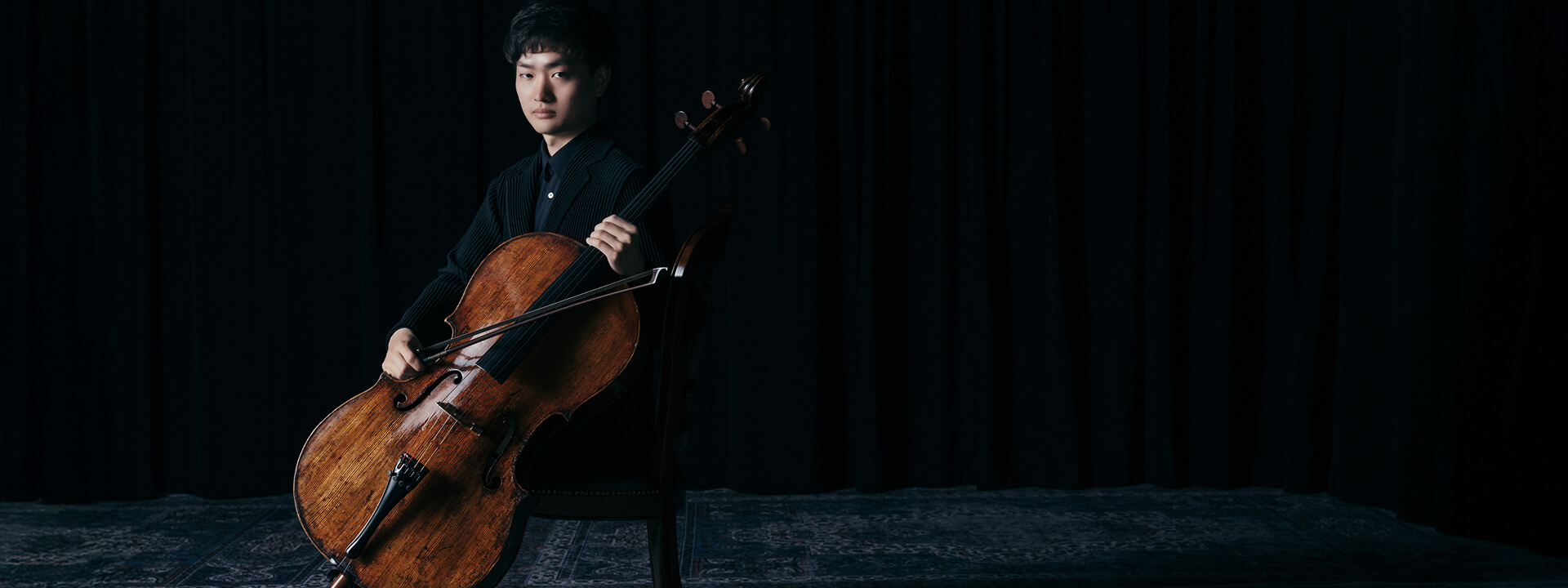
Mizuno & Hanus & DSO Berlin
Bruckner’s “boldest” symphony and Shostakovich’s cello concerto with Yuya Mizuno, winner of the Prague Spring IMC 2025, are brought to you by Berlin’s Grammy Award-winning “orchestral think tank”.
Programme
- Dmitri Shostakovich: Concerto for Cello and Orchestra No. 1 in E flat major Op. 107
- Anton Bruckner: Symphony No. 6 in A major
Performers
- Deutsches Symphonie-Orchester Berlin
- Tomáš Hanus – conductor
- Yuya Mizuno – violoncello
The festival concert on 31 May will see the return of several big names. After an absence of almost thirty-five years the Prague Spring welcomes back one of the finest German symphonic ensembles, Berlin’s “think tank”, the Deutsches Symphonie-Orchester Berlin. Following Lorin Maazel and Vladimir Ashkenazy, taking the helm on this occasion will be Czech conductor Tomáš Hanus, whose performance of My Country with the Welsh National Opera Orchestra in 2023 resonates to this day in the hearts of countless music fans. Moreover, together they will present works by two composers cherished by the Prague Spring: Dmitri Shostakovich, who was a guest of the festival back in 1947, and Anton Bruckner, whose colossal symphonies have been performed at the Prague Spring by the likes of Karl Böhm, Kurt Masur, Lorin Maazel and Daniel Barenboim. The soloist in Shostakovich’s Concerto for Cello and Orchestra No. 1 is the charismatic winner of the Prague Spring International Music Competition 2025, Japanese cellist Yuya Mizuno. “Performing Shostakovich’s Cello Concerto No. 1 at the Prague Spring International Music Festival holds a special significance for me,” Yuya tells us. “It was composed in 1959 for Mstislav Rostropovich, who himself won the Prague Spring International Music Competition in 1950 and had a deep connection to this city. It is a great honour to perform this work in the same place, following in his footsteps.”
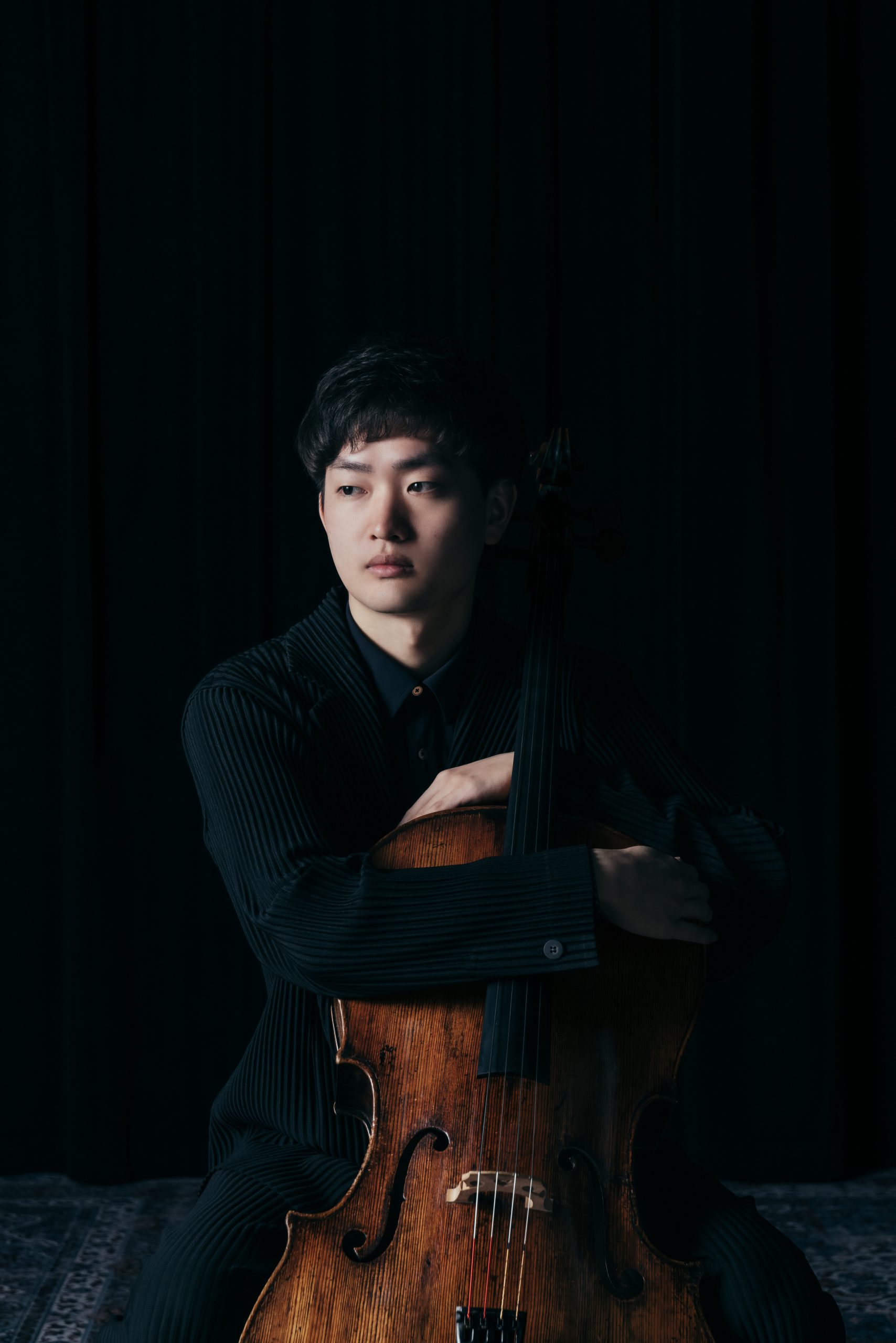
When Dmitri Shostakovich (1906–1975) handed the manuscript of his first cello concerto to his friend Mstislav Rostropovich, twenty years his junior, on 2 August 1959, the latter returned after four days and played the whole piece from memory. He remarked upon it later: “On the 6th of August I played him the concerto from memory – three times in a row. After the first run, he became deeply moved and, as you might expect, we had a little vodka. The second time, I didn’t play all that perfectly, so we had a bit more vodka. The third time, I believe I was playing the Saint-Saëns concerto, but he was accompanying me from his own concerto score. We were endlessly happy…” The brilliant cellist subsequently played this demanding work – which treats the motif D-S-C-H [D-E flat-C-B natural] and, in the closing movement, ironically quotes Stalin’s favourite song Suliko – to audiences all over the world. Today most cellists have the concerto in their repertoire and it is unquestionably one of the composer’s most popular works. “This piece is filled with tension, inner conflict and, at times, sharp humour,” says Yuya Mizuno. “From the forceful opening motif, the introspective second movement, and the third movement, which serves as an extended cadenza, to the ironic finale, the piece challenges the performer with both technical demands and emotional depth. It is truly one of the greatest concertos ever written for the cello,” Yuya concludes. When the cellist performed Bach’s Suite for Solo Cello in D major and Dvořák’s Cello Concerto in B minor in the final round of the Prague Spring International Music Competition, he captured the hearts of the international jury and the audience, deservedly winning first prize. A graduate of Mozarteum University Salzburg, where he studied with Clemens Hagen, a member of the renowned Hagen Quartet, Mizuno plays on a rare instrument crafted by Pietro Giacomo Rogeri from 1730, kindly loaned to him by the Suntory Foundation. He has given performances at Mozartwoche in Salzburg, the Budapest Spring Festival and CHANEL Pygmalion Days in Tokyo. As a soloist he has appeared with Japan’s finest orchestras, including the Tokyo Symphony Orchestra.
Anton Bruckner (1824–1896) worked on his Sixth Symphony for two years, between 1879 and 1881, and various testimonies suggest that he was entirely pleased with the outcome. He described it to music critic Theodor Helm as “die keckste” – the boldest and most daring of his works. “There is that great German word Wehmut, which defines a sort of melancholy, yet not; it is more like nostalgia, with a smile and a tear at the same time, and I think that constantly colours the Sixth Symphony,” Australian conductor Simone Young describing the piece in Gramophone magazine. Bruckner’s Sixth has a celebrated history at the Prague Spring. It appeared twice on the programme of the Leipzig Gewandhausorchester (Franz Konwitschny, Kurt Masur), likewise the City of Birmingham Symphony Orchestra (Sir Simon Rattle, Mirga Gražinytė-Tyla), and it was also presented by the Vienna Philharmonic under Karl Böhm, the Munich Philharmonic with Sergiu Celibidache, and the Orchestre de Paris under Daniel Barenboim. Tomáš Hanus will be the first Czech conductor at the festival to take up this monumental, yet also highly intimate work with its wonderful second and third movements. Currently Music Director of the Welsh National Opera and, from this season onwards, also Principal Guest Conductor of the Iceland Symphony Orchestra, Hanus regularly steps up onto the rostrum of Europe’s foremost opera houses, including the Vienna and Bavarian State Operas and Milan’s La Scala, and he was worked with leading European orchestras such as the London Symphony Orchestra, the BBC Symphony Orchestra and Camerata Salzburg.
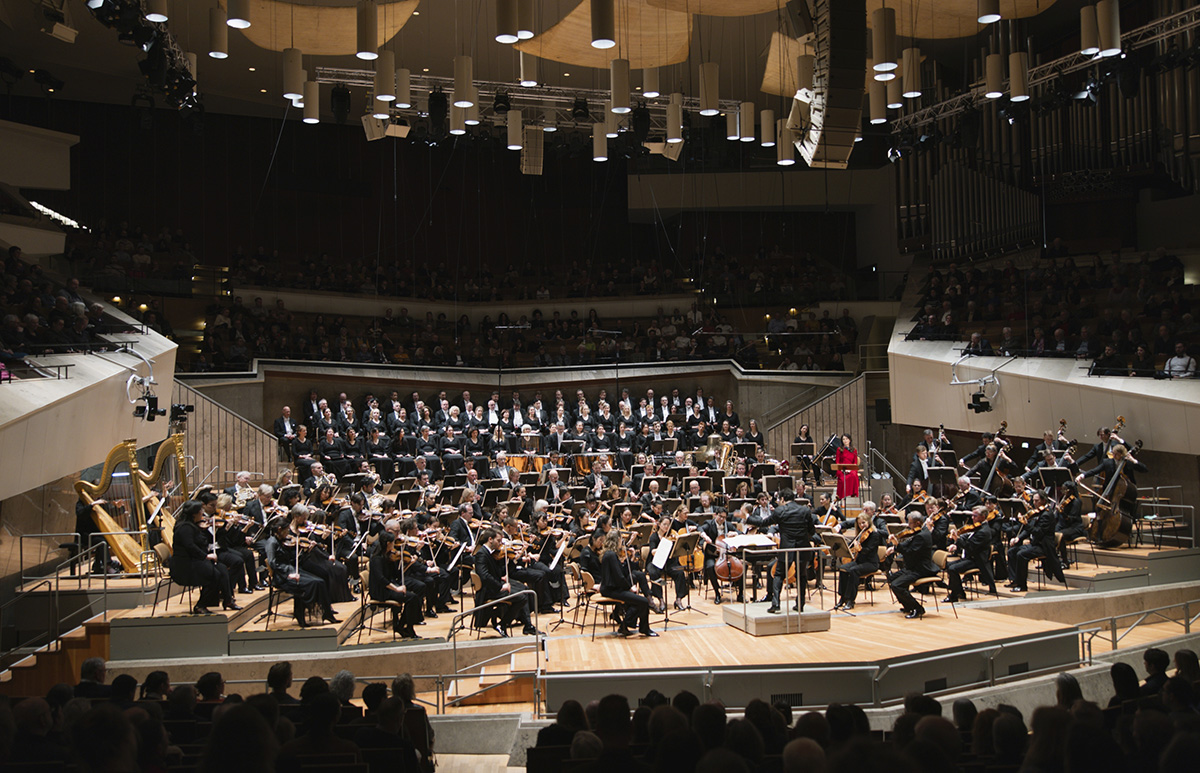
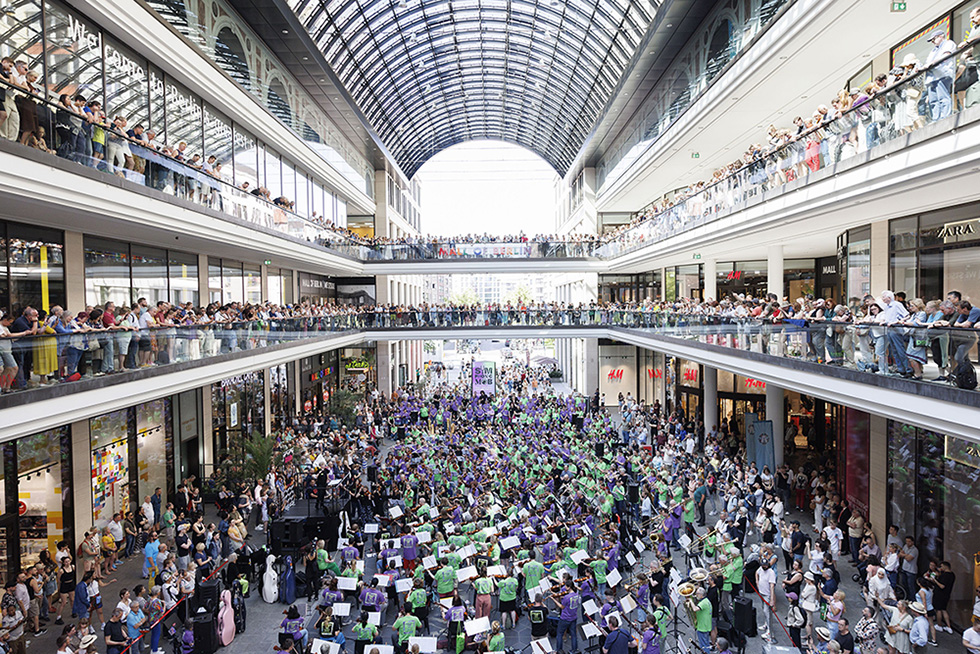
Since it was founded in 1946, the Deutsches Symphonie-Orchester Berlin (DSO) has maintained its status as one of Europe’s most prominent orchestras. Back then, when it was known as the RIAS-Symphonie-Orchester, its artistic profile was shaped by its first Music Director, Ferenc Fricsay, who placed emphasis on precision and a broad repertoire, and ensured the orchestra’s high musical standard. His legacy was cultivated further by Music Directors Lorin Maazel, Riccardo Chailly, Vladimir Ashkenazy, Kent Nagano, Ingo Metzmacher and Tugan Sokhiev. In recent years the ensemble’s sound has been honed by British conductor Robin Ticciati, and from September 2026 it will be led by Japanese maestro Kazuki Yamada. Germany’s influential daily Süddeutsche Zeitung described the DSO as Berlin’s “orchestral think tank” which, in a city that hosts the illustrious Berlin Philharmonic and a number of other first-rate symphony orchestras, is a huge commendation. Certainly a contributing factor to this status is the international acknowledgement of campaigns such as Kein Konzert ohne Komponistin! (No Concert Without a Female Composer) or Afrodiaspora – Composing While Black. Frequent concert tours have taken the DSO to both traditional destinations and also further afield to Argentina, Brazil, Malaysia, China and the United Arab Emirates; the orchestra also participates in the Salzburg Festival and the BBC Proms. In 2011 the DSO won together with Kent Nagano a Grammy for its recording of the opera L’amour de loin (Love from Afar) by Finnish composer Kaija Saariaho.
Listen to a selection of this programme with Deutsches Symphonie-Orchester Berlin, Robin Ticciati and Nicholas Altstaedt